Is That a Scale Insect on Your Olive Tree? A 3-Step Check
Small bumps on the bark, sticky leaves, a dusting of black. Here is how to tell a harmless blemish from an infestation that will kill a tree in one season.
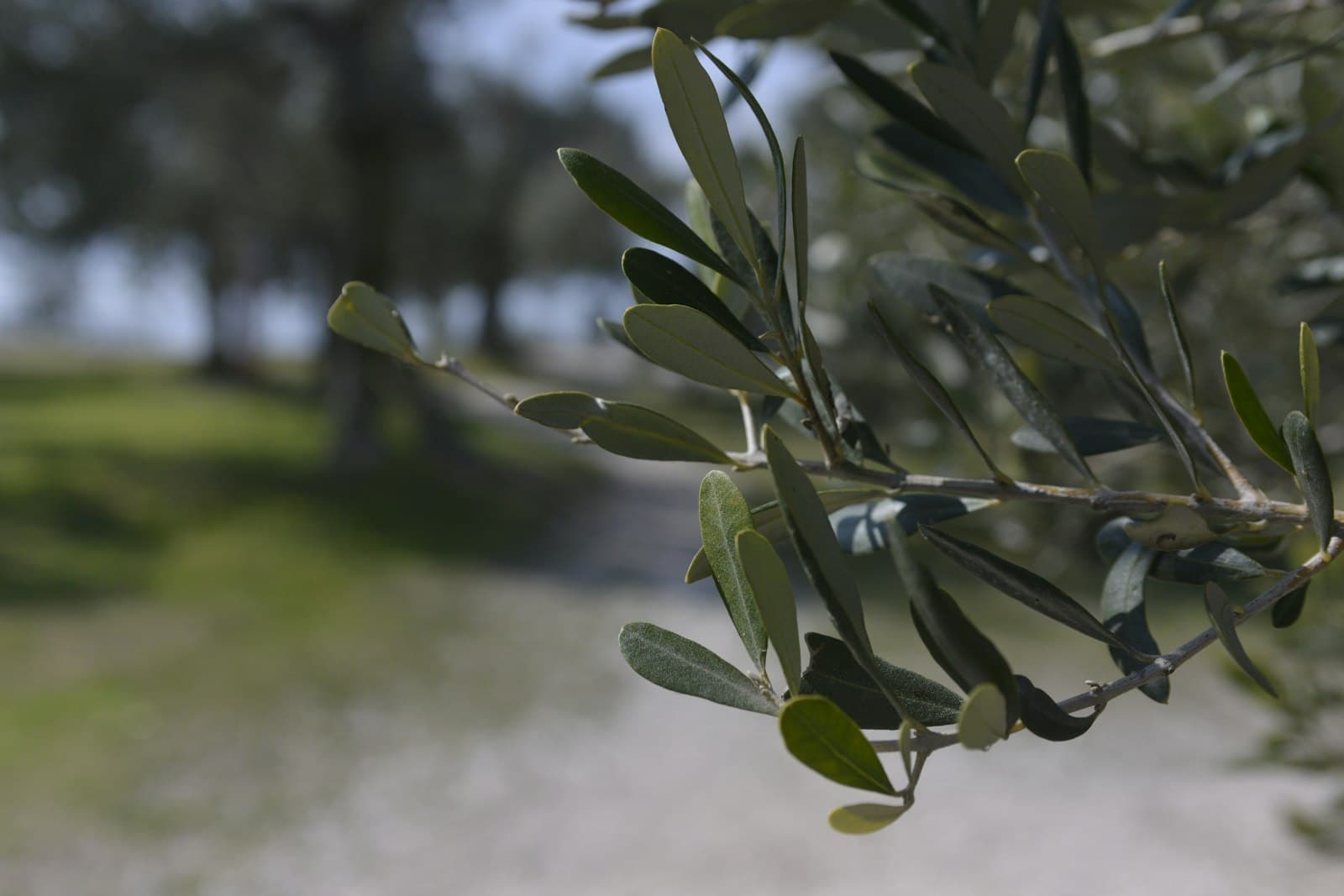
Photo: Sydney Elam · Unsplash
Having this problem in your own garden?
Get a free site visitYou inspect your olive tree on a spring morning and notice something odd: small brown or grey bumps scattered across the bark. Below them, the leaves feel slightly sticky, and two or three leaves are covered in a black soot-like film.
These are the signs of scale insects — one of the most dangerous olive pests in the Mediterranean basin. The good news is they are treatable when caught early.
The 30-second check
Step 1: Push a bump with your fingernail. If it slides off or lifts easily, leaving a small wet yellow patch — it is an insect. If it is rock-hard and fully fused to the bark — it is probably an old wound or scar.
Step 2: Look under the leaves. Flip two or three leaves on the lower branches. Scale insects prefer the larger veins on the underside. If you see small round spots, attached, a different colour from the leaf — they are there.
Step 3: Stickiness test. Run your hand under the tree's canopy. If your skin feels tacky, the insects are excreting "honeydew." This is a definitive sign.
The common species in the Mediterranean
1. Black olive scale (Saissetia oleae). The most common. Small 3–5 mm dark-brown domes on twigs.
2. Olive scale (Parlatoria oleae). Smaller and more damaging. Flat, tiny grey scales on leaves and fruit.
3. Oleander scale (Aspidiotus nerii). White or pale yellow, mostly on leaves.
All three suck sap and excrete honeydew, which attracts sooty mould fungus — this is what gives the tree its dirty grey-black appearance.
◆ NAS Landscape
Not sure if this applies to your garden?
The four causes above look alike from a distance but need different treatments. A 30-minute site visit from our specialist gives you the right answer — no guessing.
Request a free diagnosisWhat you can do this week
If the infestation is light (a handful of bumps on one or two branches):
- Manual cleaning. Wipe affected branches with a cloth dampened in water and insecticidal soap. This physically removes many of the insects.
- Horticultural oil. One spray of horticultural oil at dawn. The oil seals the insect's breathing pores. Safe, approved even for organic production.
- Repeat after two weeks — to kill the next generation as they hatch.
When to stop and call a specialist
- If you see more than 10 scales on any random leaf.
- If sooty mould covers more than 30% of the canopy.
- If the tree is dropping immature fruit before ripening.
- If the tree is heritage or rare (older than 50 years) — do not risk it.
These cases need a staged treatment plan: sprays timed precisely to the insect's life cycle, and monitoring over two seasons. A random summer spray can kill pollinator bees and break your garden's balance.
NAS Landscape specialists customise a treatment plan based on:
- The specific species (visual + microscopic inspection)
- Life-cycle stage
- Tree age and value
- Canopy size and infestation extent
The golden rule
Scale insects do not disappear on their own. Every season you wait, populations multiply three- or fourfold. A tree lightly infested in May is in critical condition by October.
Time is the difference between a $30 spray and losing a two-hundred-year-old tree.
Sources:
- CABI Invasive Species Compendium, Saissetia oleae datasheet (2023).
- University of California IPM, Olive Pest Management Guidelines.
- FAO, Integrated Pest Management for Olive Production (2018).
- NAS Landscape experience in heritage olive nurseries across Türkiye and Jordan.
◆ A real diagnosis, not a guess
Send a photo. Get a plan.
Our specialists handle cases like yours across Istanbul and the wider region. Share a photo on WhatsApp or book a free site visit — whichever is faster for you.
60+ years · 7 countries · 500+ projects · third-generation atelier
◆ More field notes
 Pests & Disease
Roses Without Blackspot: A Mediterranean-Climate Protocol That Actually Holds
Black spot is the single most mistreated disease on Mediterranean rose borders. Most owners spray, see nothing, and spray harder. Here is what actually works — starting with the water, not the fungicide.
 Pests & Disease
Why Is My Italian Cypress Turning Brown? 5 Causes and the Fix for Each
A browning Italian cypress is not one problem — it is five. Most home treatments make the tree worse because the diagnosis is wrong. Here is the order we work through at the atelier.
 Pests & Disease
White Scale on Citrus: A 7-Day Treatment Protocol That Actually Works
Cottony white tufts on your lemon, orange, or mandarin branches? Here is the exact week-long protocol the atelier uses to clear a severe infestation without killing the tree.
Editorial & digital direction
Written, designed, and built by MHD ZUHIR MADAMANI · Istanbul