White Scale on Citrus: A 7-Day Treatment Protocol That Actually Works
Cottony white tufts on your lemon, orange, or mandarin branches? Here is the exact week-long protocol the atelier uses to clear a severe infestation without killing the tree.

Photo: Unsplash
Having this problem in your own garden?
Get a free site visitThe small white tufts that look like cotton wool stuck to the undersides of your lemon tree's leaves are not dust and they are not fungus. They are cottony cushion scale — a sap-sucking insect with a waxy protective coating that makes it nearly immune to ordinary sprays. Left untreated, a moderate infestation will weaken a mature citrus tree in a single season and kill a young one in two.
The usual advice — "spray with soapy water" — does not work on a scale infestation past the first week. The wax coating blocks soap. What follows is the actual seven-day protocol we use at NAS when a villa client calls with a citrus emergency.
Day 0 — confirm it is scale, not mealybug
Before you treat, confirm the pest. Mealybugs look similar but are mobile and smaller. Scales, once they settle, do not move. Press one with the tip of a pen: if it crushes into an orange-yellow fluid and leaves a waxy shell behind, you have scale. Mealybug crushes into a greyish paste.
The other check: run your finger along the underside of a leaf. Scale feels hard and bumpy, like tiny limpets glued to the surface. Mealybug feels fluffy and comes off easily.
Day 1 — mechanical removal
This is the single most important day of the protocol and the step most people skip.
Using a soft-bristle toothbrush and a bowl of water with a splash of neutral dish soap, physically scrub every visible scale cluster off the branches and leaves. Work from the trunk outward. Expect to spend at least forty minutes on a medium tree. This reduces the population by roughly 70 percent before you apply any spray, and no spray works if you skip it — the wax coating blocks everything.
Drop every dislodged cluster into a bucket of water with a little bleach. Do not let them fall on the soil — they can crawl back up.
◆ NAS Landscape
Not sure if this applies to your garden?
The four causes above look alike from a distance but need different treatments. A 30-minute site visit from our specialist gives you the right answer — no guessing.
Request a free diagnosisDay 2 — first horticultural oil spray
Early morning, before the sun hits the tree. Use a fine-grade horticultural mineral oil (also sold as "white oil" or "summer oil") diluted per the label — typically 15 ml per litre of water. Do not substitute cooking oil.
Spray the entire tree, under the leaves especially, until runoff. The oil does not poison the scale; it suffocates it by blocking the breathing pores. This is why coverage matters more than concentration — every insect must be coated.
Do not spray if the temperature will exceed 30 °C that day, or if the tree is water-stressed. Oil on hot, dry foliage burns the leaves.
Day 3 — observe, do not spray
Leave the tree alone. Inspect in the afternoon. Scales that were properly coated will dry out and flake off over the next few days. If you see active crawler movement on the trunk (tiny orange-pink dots — these are juvenile scales that hatched underneath the adult shell), note the locations but do not re-spray yet.
Day 4 — second oil spray, targeted
Repeat the oil treatment, this time focused on areas where you saw crawler activity on Day 3. You do not need to drench the whole tree again — just the hot zones.
This is the application that catches the juveniles that were protected under their mother's shell during the first spray.
Day 5 — introduce predators (the long-term fix)
Release Cryptolaemus montrouzieri (the mealybug destroyer beetle) or order Rodolia cardinalis, the vedalia beetle — a ladybird that specifically eats cottony cushion scale. In Türkiye these are available through agricultural supply houses; in the Gulf via import. One small container of larvae per tree is enough.
Why predators matter: oil sprays break the visible infestation, but scale populations rebuild silently from the eggs you cannot see under bark scales. Predatory beetles find and eat these for you, continuously, for months.
From NAS's orchard-maintenance work across Türkiye and the Gulf: the orchards where we release predators once a year do not need any chemical intervention for two or three years afterward. The orchards that rely on sprays alone are back on our call list every eight months.
Day 6 — soil drench (only if severe)
For heavily infested trees, apply a systemic neonicotinoid drench — imidacloprid — at the base of the trunk according to label rates. This is pulled up into the sap and reaches scales hidden where sprays cannot.
Important caveats: do not use systemics on a citrus tree that is actively flowering or that has fruit you plan to eat within four months. Follow local regulations — imidacloprid is restricted in some European markets.
If the infestation is moderate, skip this step. Oil + predators is usually enough.
Day 7 — final inspection and ongoing schedule
Walk the tree. Lift leaves. Check trunk crevices. You should see:
- No visible live scale on the leaves
- Empty, dry scale shells on the branches (these are normal — they are the corpses and will weather off)
- Predator beetles settled on the trunk (a good sign)
From this day forward, the maintenance schedule for a treated citrus is: inspect monthly, spray oil at the first sign of new scale (usually early spring), and refresh predator releases once a year.
What not to do
- Do not use broad-spectrum insecticides (pyrethroids, carbaryl). They kill the scale but also kill the ladybirds and parasitic wasps that keep scale populations down naturally. You will have worse infestations every year.
- Do not ignore ants. Ants farm scale for the honeydew they excrete, actively protecting them from predators. If you have scale, you have ants. Wrap the trunk in a sticky band or apply an ant-specific bait at the base.
- Do not prune during an active infestation. Pruning forces the tree to push out soft new growth, which is exactly what scale prefers. Treat first, prune after.
When to ask for help
Call us — or another trusted team — if:
- The tree has lost more than a third of its leaves
- The infestation has spread to neighbouring trees (very common with citrus plantings)
- You see black sooty mould all over the leaves (this is a secondary symptom — the mould grows on scale excretions and indicates a heavy, long-standing population)
- The tree is an old specimen you do not want to lose
Citrus orchards and estate groves are a regular part of NAS's maintenance book across Türkiye and the Gulf. Send a photo to WhatsApp +90 535 422 5227 — a real landscape architect will look at it the same working day. No charge.
NAS Landscape maintains citrus orchards and villa gardens across seven countries. Established 1965, Damascus. Written by MHD ZUHIR MADAMANI, Istanbul.
◆ A real diagnosis, not a guess
Send a photo. Get a plan.
Our specialists handle cases like yours across Istanbul and the wider region. Share a photo on WhatsApp or book a free site visit — whichever is faster for you.
60+ years · 7 countries · 500+ projects · third-generation atelier
◆ More field notes
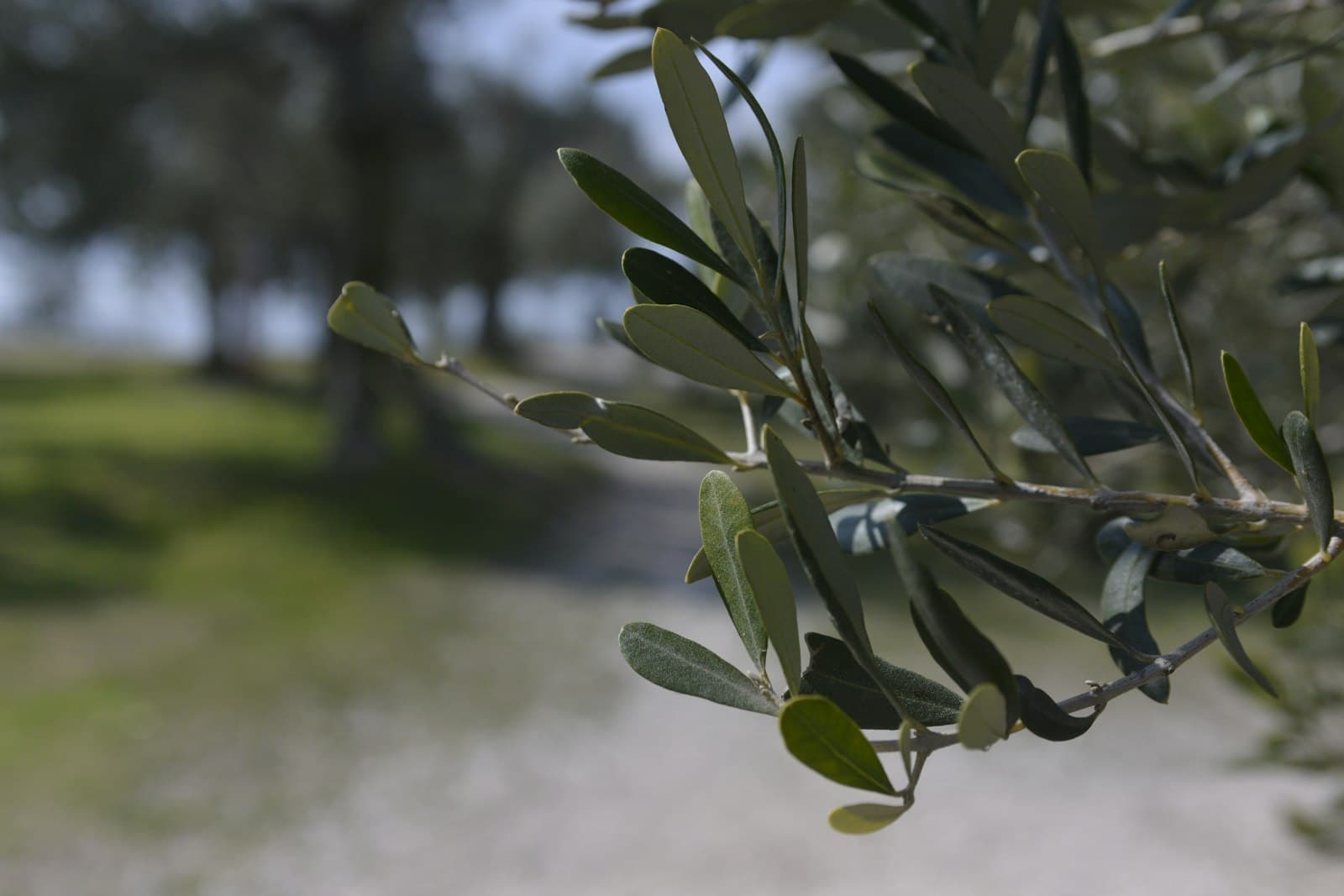 Pests & Disease
Is That a Scale Insect on Your Olive Tree? A 3-Step Check
Small bumps on the bark, sticky leaves, a dusting of black. Here is how to tell a harmless blemish from an infestation that will kill a tree in one season.
 Pests & Disease
Roses Without Blackspot: A Mediterranean-Climate Protocol That Actually Holds
Black spot is the single most mistreated disease on Mediterranean rose borders. Most owners spray, see nothing, and spray harder. Here is what actually works — starting with the water, not the fungicide.
 Pests & Disease
Why Is My Italian Cypress Turning Brown? 5 Causes and the Fix for Each
A browning Italian cypress is not one problem — it is five. Most home treatments make the tree worse because the diagnosis is wrong. Here is the order we work through at the atelier.
Editorial & digital direction
Written, designed, and built by MHD ZUHIR MADAMANI · Istanbul