Frost Protection for Villa Gardens: The Playbook We Follow Every February
One night at minus three in February can undo a year of careful villa garden work. The six-step protocol we run every winter — forecast, prepare, cover, survive, recover — with the exact materials and timing.

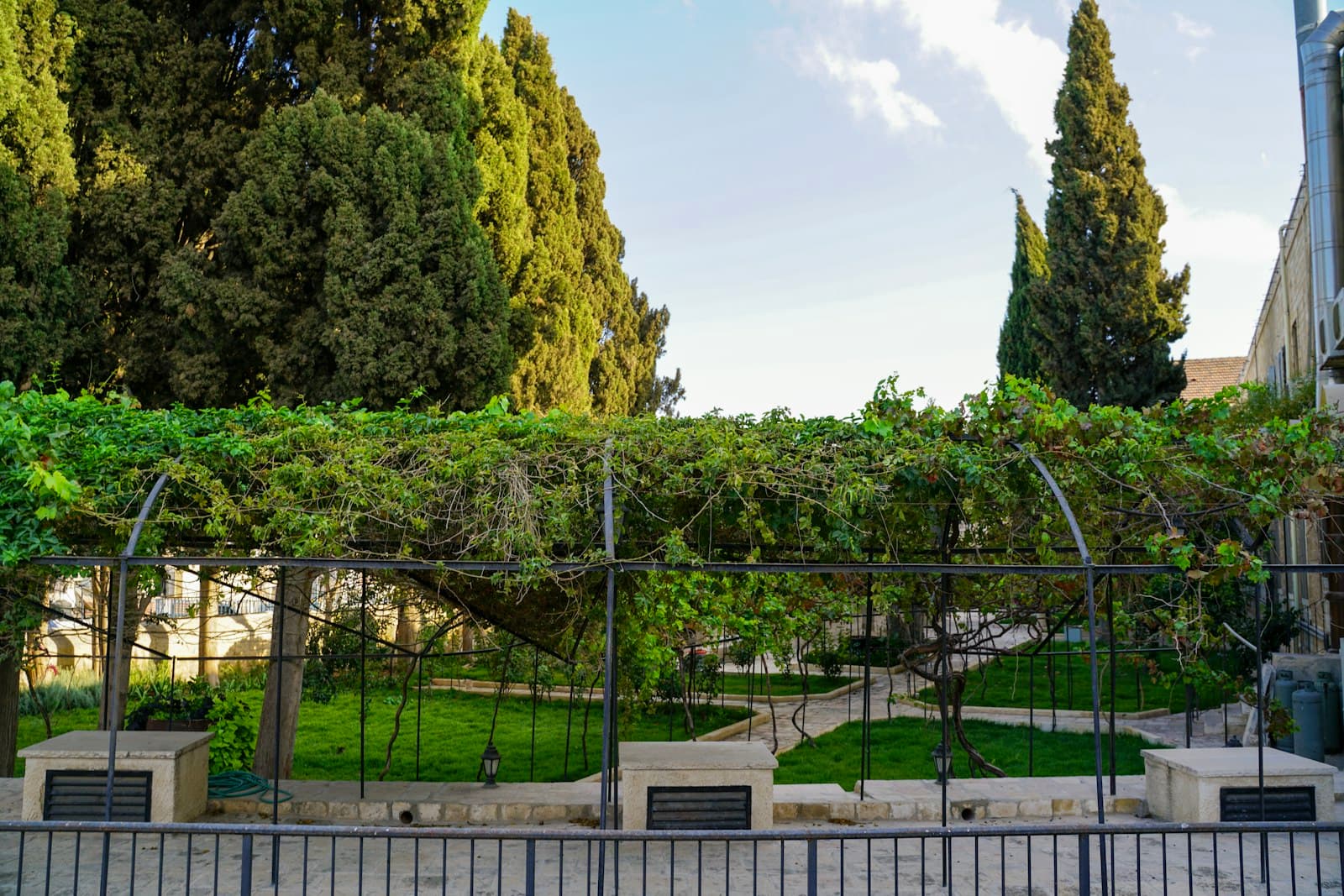
Photo: Unsplash
Having this problem in your own garden?
Get a free site visitEvery February in Istanbul, and every late January in the higher Levant, the forecast is the same: a mild fortnight, then suddenly a single night at minus three degrees, then mild again. That one night is where a year of careful garden work can disappear. Bougainvillea defoliated overnight. Young olives split. Citrus fruit turned to ice. The next morning the owner stands on the terrace holding a coffee and looking at a frozen garden that took five years to establish.
This is the playbook we run every year across our villa maintenance contracts in Istanbul, Bodrum, the higher Syrian coast, and inland estates in Jordan. It is not a list of hopeful measures — it is the sequence we know works, in the order we apply it, with the exact materials and timing.
Step one: know the forecast one week out, not one day out
Nobody protects a garden in a panic. Most damage happens when the client checks the forecast the night before and it is already too late to buy fleece, fill jugs, or move pots. Frost protection is a planning exercise.
Set up a weather alert for your site at the seven-day horizon, not just tomorrow. The phone weather app will tell you 10 °C tomorrow; an actual forecast service like Windy.com, MeteoBlue, or the Turkish MGM operational product will tell you the cold front is crossing five days out.
When the seven-day forecast first shows a night below 2 °C — not when the night arrives — you start the playbook.
Step two: understand which plants actually need protecting
Not every plant in the garden is at risk. The common panic is to cover everything, which is both exhausting and unnecessary.
Must protect at any frost threat (below 2 °C):
- Bougainvillea (defoliates at 5 °C, dies back at frost)
- Citrus trees under five years old (lemon, orange, mandarin, lime)
- Young olive trees under three years (older ones generally fine)
- Jasmine, gardenia, plumeria, hibiscus in containers
- Young palm trees (Washingtonia, Phoenix) in their first two winters
- Any tropical or subtropical ornamental on a rooftop or exposed terrace
- Geraniums, bougainvillea cuttings, succulents in pots
Usually fine without intervention:
- Mature olive trees (native to the climate, tolerate -8 °C)
- Mature cypress, pine, cedar
- Mature roses, most Mediterranean shrubs
- Lavender, rosemary, sage, thyme (Mediterranean natives)
- Mature pomegranate, fig, carob
- Lawns (Bermuda dormant, fescue and rye survive)
The 50/50 cases that repay the work:
- Fruiting citrus with unripe fruit on the branches (the fruit freezes; the tree often survives)
- Camellias and azaleas in bloom (flowers go to mush at 0 °C)
- Anything expensive you bought last autumn
Target the must-protect list and the fruiting cases. Ignore the mature Mediterranean plants. Ignore the lawn.
◆ NAS Landscape
Not sure if this applies to your garden?
The four causes above look alike from a distance but need different treatments. A 30-minute site visit from our specialist gives you the right answer — no guessing.
Request a free diagnosisStep three: prepare the night before, before dusk
The work actually starts the afternoon before the forecast frost night, not at bedtime. Frost is radiative — the garden loses heat to the clear night sky — and every preparation we do is about capturing or replacing that heat.
Water deeply in the late afternoon
Moist soil holds three times more heat than dry soil and releases it through the night. Water every at-risk plant deeply about three hours before sunset, so the water has time to infiltrate but the soil surface is still warming from the late sun.
This one step alone gives you a 2 to 3 °C buffer in the root zone. For a plant right on the edge of frost tolerance, that is often enough.
Mulch thick around the base of vulnerable plants
A 10 cm layer of coarse mulch — straw, wood chip, pine needles, or leaf litter — around the root zone of a young citrus or bougainvillea locks the heat in the soil overnight and insulates the crown of the plant. Build the mulch up against the trunk only on frost nights; pull it back by 5 cm in the morning so crown rot does not set in.
Move every moveable pot
Any container plant that can be carried goes inside overnight — an unheated garage, a covered veranda, or up against a south-facing wall of the house. A wall radiates stored heat through the first half of the night and buys a 3 to 5 °C buffer. For very tender plants like bougainvillea in pots, inside is better than outside, every time.
Step four: cover — but do it right
Most frost-cover mistakes happen here. Plastic sheeting laid directly on foliage is worse than no cover — it traps cold air, sticks to leaves overnight, and frost burn is often more severe than unprotected exposure.
Use frost fleece or horticultural fabric, 30-50 gsm, not plastic. Fleece is breathable, it is designed for this use, and reusable for years. Every professional garden we maintain holds a folded stack of fleece in early winter for the two or three frost events of the season.
The technique:
- Drape loosely over the plant, letting it reach the ground on all sides. The key is that the fleece traps the warmer air rising from the soil.
- Anchor the edges with stones, soil, or garden staples. Wind at dawn will lift unsecured fleece and the cold gets in.
- For plants taller than about 1.5 m, build a simple frame of bamboo canes around the plant and drape the fleece over — do not let the fabric actually touch the foliage on hard frost nights, because foliage in contact with the outer cover can still freeze.
What not to do: do not use black plastic. Do not use an old blanket that gets wet and becomes a frozen weight. Do not cover bougainvillea or any woody plant with a garbage bag.
Step five: the sacrificial strategies
For gardens in truly cold locations — inland Istanbul, the Aegean in a hard year, the Levantine highlands — some specific tactics handle the coldest nights.
Water-filled jugs around the plant. Place four or five large water-filled jugs around a vulnerable citrus or bougainvillea, inside the fleece. Water's thermal mass releases heat slowly overnight, and as it freezes it releases more latent heat. Commercial orchards have used this for a century.
Christmas lights (incandescent, not LED) inside the cover. Old-fashioned warm-white filament Christmas lights throw enough heat to lift a covered plant's interior temperature by 2 to 3 °C overnight. LEDs do not work — they run cold. This is specifically a trick for your grandmother's attic lights, not the modern ones.
Wind-block on the windward side. Many "frost" events are actually advective frost — a cold wind carrying sub-zero air across the garden. A temporary wind break of burlap stretched between two stakes on the windward side of a cypress hedge, a bougainvillea on a pergola, or an exposed citrus is often more effective than overhead cover.
Step six: the morning after — what to do and not do
Plants that have gone through a frost look terrible at dawn. The instinct to prune off the damage immediately is usually wrong.
Do:
- Remove fleece covers by mid-morning so the plants get sun
- Water again, lightly, if the soil is dry — frozen water in the soil does not reach the roots
- Assess damage a week later, not on the morning of
Do not:
- Prune off frost-damaged foliage the same day. The damaged foliage is still protecting the stems below. Wait until spring to see what has truly died.
- Assume the whole plant is gone. Bougainvilleas, citrus, and many other tender plants often look completely dead after a frost and then put out new growth from the trunk or roots once the weather warms.
- Apply fertiliser to "help it recover" — this is the worst thing to do. Hungry plants are more frost-tolerant; well-fed plants push soft new growth that freezes in the next event.
What the atelier does for villa maintenance clients
Every villa on our Istanbul monthly maintenance programme receives a specific winter protocol from the first week of December: fleece stocked in the garden store, the at-risk plant list reviewed against the forecast every week, and a team dispatched the afternoon before any forecast frost night. On our Bodrum, Antalya, and Göcek projects the cover is specifically burlap not fleece, because the salt-laden onshore wind shreds lighter fabrics.
For our estate clients in Jeddah, Riyadh, Doha, and the Gulf — where frost is rare but real, usually one or two nights in January — the protocol is the same, with an emphasis on the young date palms (Phoenix, Washingtonia under three years) and the bougainvillea walls that are the first thing to go.
When to call us
Call the atelier when:
- The forecast shows a frost event 48 hours out and you do not have fleece, water, or a plan
- You are moving into a new villa and want a winter protection strategy set up before the first cold night
- A frost has already hit and you need an assessment of what can recover and what should be replanted
- You are thinking about planting tender plants (bougainvillea wall, citrus collection, palm grove) and want winter survivability built into the plan
A mature garden is not replaceable in a single season. One night of frost can set an estate back five years. Send a photo and your forecast to WhatsApp +90 535 422 5227 — a real landscape architect will look at it the same working day. No charge for the first read.
NAS Landscape has run winter-protection protocols across villa and estate gardens in Türkiye, Syria, the Gulf, and Jordan since 1965. Written by MHD ZUHIR MADAMANI, Istanbul.
◆ A real diagnosis, not a guess
Send a photo. Get a plan.
Our specialists handle cases like yours across Istanbul and the wider region. Share a photo on WhatsApp or book a free site visit — whichever is faster for you.
60+ years · 7 countries · 500+ projects · third-generation atelier
◆ More field notes
 Seasonal
When to Plant in Istanbul: A Seasonal Guide
Istanbul sits where the Black Sea, the Marmara, and the Balkan air all bargain over the weather. A practical month-by-month planting calendar from an atelier that has worked the city's gardens since 2000.
 Seasonal
What to Plant in April in Istanbul: A Week-by-Week Atelier Guide
April in Istanbul is the most productive planting window of the year. Miss it by a week and you are planting into summer stress. Here is the week-by-week calendar we keep on the nursery wall.
 Seasonal
Preparing a Garden for the First Heatwave: A 4-Week May Checklist
Summer does not kill gardens — a garden entering summer unprepared does. Four weeks of work in May protects the entire season. Here is the week-by-week plan.
Editorial & digital direction
Written, designed, and built by MHD ZUHIR MADAMANI · Istanbul