The Quiet Art of Garden Shade: How to Build a Villa Garden You Can Actually Use in August
The most expensive mistake a Mediterranean villa garden can make is to be unusable in August. Shade is a 10 °C climate intervention — the single most important design element — and it should be planned first, not last.
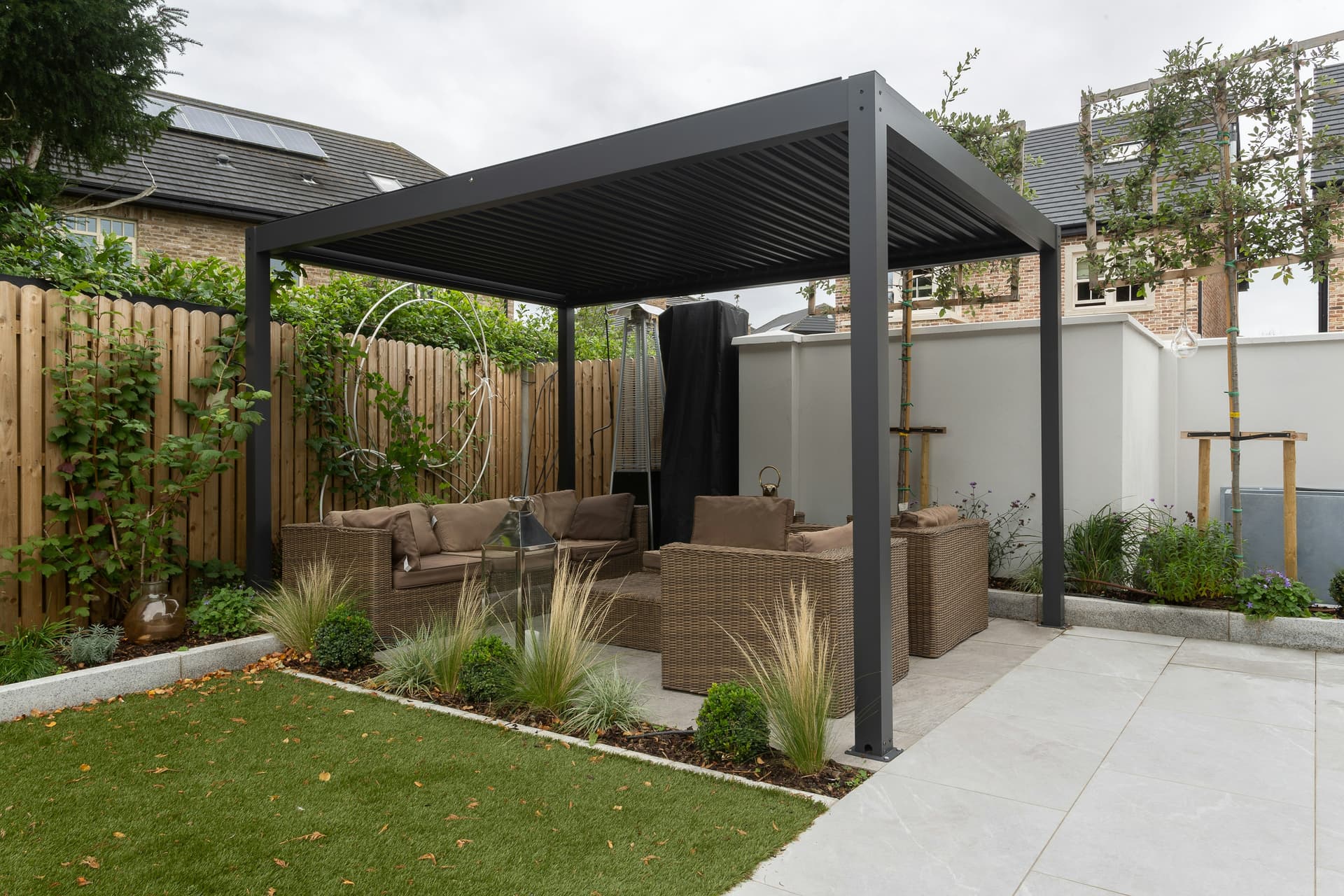
Photo: Unsplash
The most expensive mistake a Mediterranean villa garden can make is to be unusable in August. It happens more than it should. The terrace is laid, the planting is specified, the pool tiled, the furniture delivered — and then the first real summer comes and the garden simply does not work. It is too hot, too bright, too exposed. The owners are inside by 11 a.m. and stay there until 7 p.m. They admire the garden through the window. What was built for outdoor living becomes a daily photograph.
The problem is almost never the plants, the stone, or the irrigation. The problem is shade. Or rather, the lack of it — and the lack of a design that took shade as seriously as the planting scheme did.
This essay is about what shade actually is in a hot-climate garden, why it is the single most important design element, and how we plan it on villa projects from Çekmeköy to Jeddah to Marrakech. It is also, inevitably, an argument — against the open, architectural, high-summer garden that looks magnificent in March photographs and is unoccupied in July.
What shade actually does
Shade is a 10 °C climate intervention. At 2 p.m. on a Jeddah August day, a stone terrace in full sun reads 58 °C at the surface and the air temperature 50 cm above it is 46 °C. The same terrace under a well-planned pergola reads 36 °C at surface and 32 °C at seated height. The difference is not comfort versus discomfort. The difference is whether the space is usable or not.
In Istanbul the numbers are milder but the principle is the same: an August afternoon at 34 °C in direct sun is 28 °C in dappled shade. One is unbearable. The other is the best time of day.
Shade also does other things:
- It cuts air conditioning load on the house by 20-30% if deployed on the south and west walls
- It allows a whole second plant palette to thrive — Mediterranean shade plants, the ferns and hydrangeas and hostas that cannot exist in full sun
- It creates visual layers in the garden, depth and mystery that an open sunlit garden cannot have
- It extends the usable season by two months on either end
And yet it is still, routinely, an afterthought. The new villa is built, the landscape specified, the pool dug, and then the architect or client notices that there is nowhere pleasant to sit outside between June and September. A retrofit pergola goes in, half the garden has to be reorganised around it, and the result is usually a compromise.
Plan shade first.
The three kinds of shade — and when to use each
Not all shade is equal. A landscape architect planning a villa garden has three distinct kinds of shade to specify, and the successful garden uses all three in different zones.
Dappled shade — from deciduous trees
Dappled shade is what a large deciduous tree produces: a moving, inconsistent pattern of light and shadow through the canopy. It is the most atmospheric of the three. A century-old plane tree, a well-grown jacaranda, a mature mulberry — these create an experience, not just a temperature.
Dappled shade is the shade to plan around the main outdoor living area: the primary terrace, the dining zone, the seating circle. The cost: twenty years. You cannot buy dappled shade. You can only plant it and wait, or — where the atelier comes in — transplant a mature specimen and compress that wait to a single season.
Our specified species for villa work:
- Platanus orientalis (Oriental plane) — Istanbul and the Levant, vast canopy, classic.
- Jacaranda mimosifolia — Gulf estates and Mediterranean coast, purple bloom in late spring, fine dappled shade.
- Morus alba 'Fruitless' — shade without fruit mess, common in old Ottoman gardens.
- Schinus molle (pepper tree) — arid Mediterranean and Gulf, elegant fine foliage, dense shade.
- Ceratonia siliqua (carob) — deep green leaves, heavy dappled shade, slow but definitive.
Built shade — pergolas, canopies, and shaded structures
Built shade is immediate. It is also controllable, directional, and can be designed to work with the architecture of the villa in a way a tree cannot.
A well-built pergola is a garden room without walls. It creates vertical rhythm, frames a view, and provides usable shade within a season of construction. The question is the cover — which plant, or which material, does the actual shading.
The vine options:
- Vitis vinifera (grape vine) — the classical choice, ancient Mediterranean answer. Heavy foliage through summer, drops leaves in winter to let sun through.
- Wisteria sinensis — breathtaking spring bloom, full summer shade, but aggressive roots and weight that need a properly engineered pergola.
- Jasminum grandiflorum — evergreen across most of the Mediterranean, fragrant, heavier year-round shade.
- Bougainvillea — for the truly hot climates, dense evergreen shade, impossible bloom.
- Passiflora edulis (passionfruit) — functional fruit, fast cover, suits warm gardens.
The hard-cover options:
- Timber slat, open 60/40 — classic, Mediterranean vernacular, 60% sun-blocked, beautifully dappled.
- Shade cloth tensile — modern, adjustable, 75-90% shade, works well over pool zones.
- Cane thatch — Andalusian tradition, perfectly suited to dry climates, replaced every 10-15 years.
- Stone slab roof on columns — Ottoman courtyard tradition, maximum shade, slowest to build.
We tend to use a combination on a large villa: a vine-covered pergola for the dining terrace, a tensile shade over the pool lounge zone, a stone-roofed garden pavilion as a "cool room" for midday escape.
Cast shade — from walls, hedges, and architectural elements
The third kind of shade is what a wall or a dense hedge throws across the garden at different times of day. The ancient Andalusian courtyard garden was a masterclass in this — the walls, oriented carefully, meant that every surface had shade at some point in the day, and a family could follow the shade around the garden from morning coffee to afternoon tea to evening dinner.
This is the most underused kind of shade in modern villa design. A 2-metre boundary wall casts a 4-metre strip of shade at 2 p.m. in summer in Istanbul. That strip, if designed as a functional garden room — a reading bench, a plunge pool, a shaded herb border — transforms an otherwise dead edge of the property into prime mid-summer space.
The site analysis — what to do before planning shade
Before any pergola or tree is specified, we spend a full day on site, preferably in summer, with a thermometer and a sun tracker (the old-fashioned instrument, or the modern equivalent via a solar-path simulation app).
The site analysis we produce:
- Sun path maps — a diagram showing which surfaces are sunlit at each hour of the day in June, August, and December. Different surfaces are treated differently.
- Hot surface identification — walls, paving, and stone elements that will reach 50 °C+ in summer and radiate heat back into the garden at night. These require shade interventions.
- Existing canopy audit — every mature tree on the site, its canopy diameter, its species, its health. A 40-year tree we can save is worth more than five new plantings.
- Wind direction — shade interacts with wind. Pergolas on the windward side of a site block cooling breezes; on the leeward side, they create still hot air pockets. Orientation matters.
- Use-pattern mapping — where does the family actually sit, walk, eat, or swim? Shade is not uniform; it is targeted to use.
Only after this analysis is complete do we specify shade. Planning shade without site analysis is a guess, and a guess in a hot climate is usually wrong.
The integration with planting
The most elegant villa gardens we have built are ones where shade is not a separate system from the planting — it is woven through it.
The main terrace shaded by a century-old plane tree. The secondary sitting area under a grape-covered pergola. The pool lounge under tensile canvas. The boundary walls casting shade into a fern and hydrangea zone. The kitchen garden shaded in the afternoon by a carob. The olive grove itself providing dappled ambient shade across the whole middle ground.
This is what an experienced villa garden looks like: shade everywhere, not nowhere. Not the dramatic sunlit architectural photograph, but the living working garden. And the paradox is that this kind of garden is more photogenic, not less — because shade gives you contrast, drama, and atmosphere that a uniformly sunlit garden cannot.
The Mediterranean tradition — what the old gardens understood
Every great Mediterranean garden tradition understood shade. The Umayyad courtyard with its date palms and running water. The Alhambra with its Court of the Myrtles, shaded colonnades, and reflective pools. The Ottoman garden at Topkapı with its kiosks and pergolas. The Tuscan pergola terrace. The Andalusian courtyards of Seville, where a whole family moved through the day from one shade pocket to another.
These gardens were not designed to photograph well at noon in July. They were designed to be lived in at noon in July. That is a different project, and it is the project we still work on.
Where the atelier fits
NAS Landscape has designed villa gardens, estate grounds, and hotel landscapes across seven countries for three generations, and shade has been at the centre of every one. Our Gulf work specifies thick canopy architecture because the sun is not negotiable. Our Istanbul villas specify deciduous dappled shade because winter sun is a resource. Our Damascene and Amman restorations recover ancient Umayyad and Ottoman shade techniques — the carob-lined courtyard, the jasmine pergola, the oriented cast wall.
If you are designing a new villa garden and want it to be a place you actually use in August — or restoring one that became a decorative photograph and never a lived garden — the conversation begins with shade. Send the site plan, the orientation, and a few sentences about how you want to use the space, to WhatsApp +90 535 422 5227. A real landscape architect will respond the same working day.
A well-shaded garden is a longer life in the garden. The question is where and how.
NAS Landscape · Damascus 1965 · Istanbul today. Written by MHD ZUHIR MADAMANI.
◆ A real diagnosis, not a guess
Send a photo. Get a plan.
Our specialists handle cases like yours across Istanbul and the wider region. Share a photo on WhatsApp or book a free site visit — whichever is faster for you.
60+ years · 7 countries · 500+ projects · third-generation atelier
◆ More field notes
 Design
The Villa Entrance: How the First Thirty Metres Decide the Whole Garden
The garden a villa owner spends most of their budget on is rarely the one a visitor remembers. The entrance — the first thirty metres — carries every first impression, and is almost always treated as an afterthought.
 Design
Lavender That Doesn't Die: Why Most Mediterranean Plantings Fail in Year Two
Almost every failed lavender is killed the same way: with kindness. Rich soil, regular water, spring care — and two seasons later the plant is woody, brown, and gone. Lavender wants the opposite.
 Design
Why Your Bougainvillea Won't Bloom: The Counter-Intuitive Rules for Coaxing the Colour Back
Bougainvillea is a bloom-on-stress plant. Everything you would do for a normal flowering shrub — rich soil, steady water, regular feeding — tells it to stay in leaf. Here is how to do the opposite.
Editorial & digital direction
Written, designed, and built by MHD ZUHIR MADAMANI · Istanbul