The Villa Entrance: How the First Thirty Metres Decide the Whole Garden
The garden a villa owner spends most of their budget on is rarely the one a visitor remembers. The entrance — the first thirty metres — carries every first impression, and is almost always treated as an afterthought.
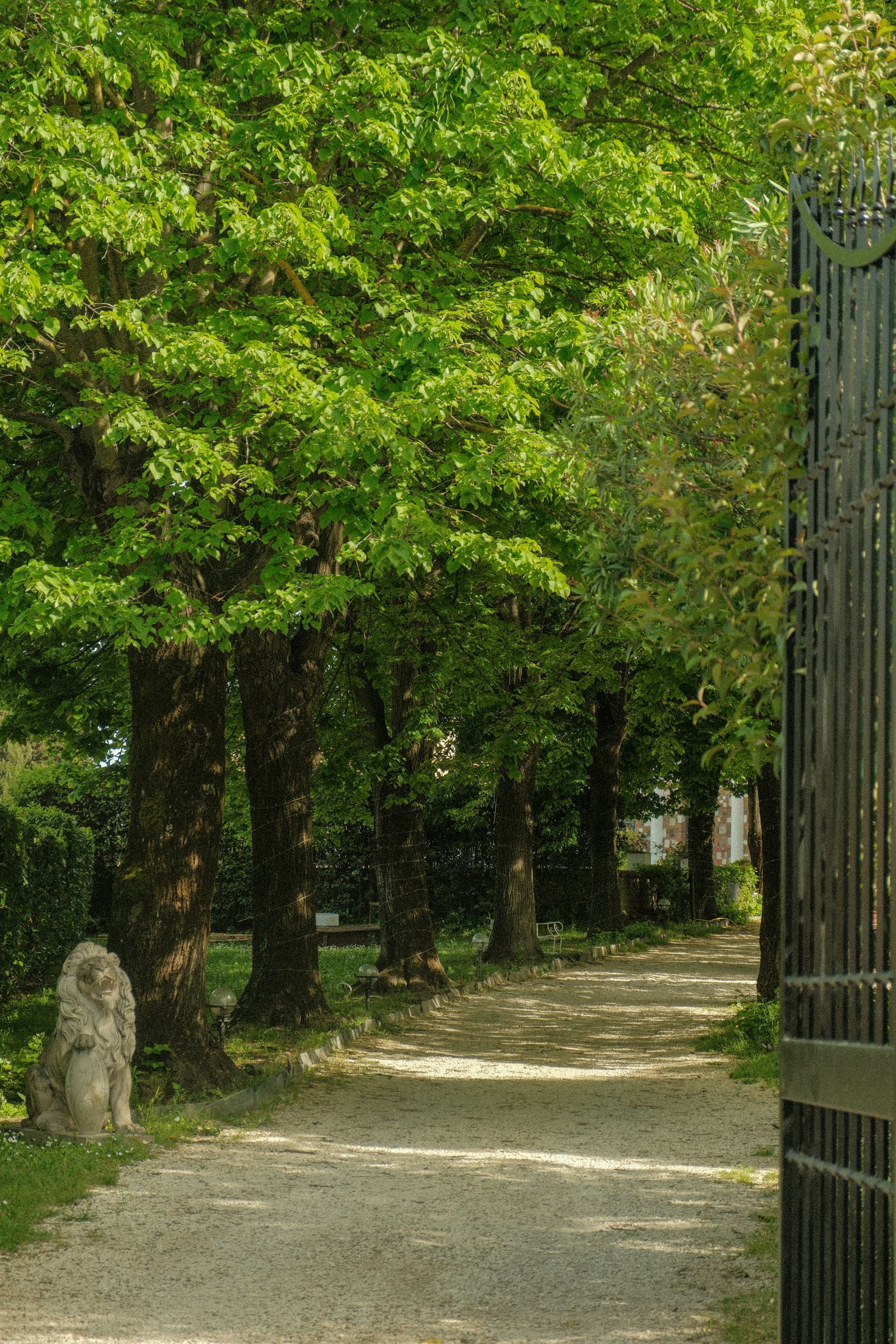
Photo: Unsplash
The garden a villa owner spends most of their budget on is rarely the one a visitor remembers. A beautiful terrace, an imported olive collection, an elegant pool — these live behind the front door and are experienced only by the family and their close friends. The part of the garden that shapes every first impression, that carries the weight of the property's identity from the street to the front door, is the entrance. The driveway. The gate. The first thirty metres.
And the first thirty metres, on the vast majority of villa projects we visit, is the afterthought. The gate was selected by the architect. The driveway was spec'd by the civil contractor. The planting was left for the landscape firm, who arrived after everything else was done and found themselves working around a drainage grate, a pump box, and a turning radius that should have been discussed twelve months earlier.
This is the essay we write for villa clients before the landscape tender is released, which is to say far too early in our engagement usually, because the entrance is not a planting problem. It is an architectural composition, and the planting is the last — not the first — step.
What the entrance actually does
The first thirty metres of a villa property do four specific pieces of work, and the successful entrance is the one that handles all four without being asked.
First, arrival sequencing. The entrance is a compression chamber between the public world of the street and the private world of the house. A visitor going from 70 km/h on the main road to a standing start at the front door needs three distinct psychological transitions: slowing, orientation, and acknowledgement. Hardscape, planting, and lighting perform these transitions. Done well, the visitor does not notice the transitions — they simply find themselves, two minutes after pulling off the road, calmly at the front door.
Second, identity signalling. The villa's character has to be legible before the house itself is visible. A Mediterranean villa approached through a cypress row says one thing; the same villa approached through a line of palm trees says something else; the same villa approached through clipped boxwood says something else again. The entrance is the first sentence of the house.
Third, privacy management. Villa owners are almost always negotiating privacy at the gate. Too open and the property feels exposed; too closed and it feels fortressed. The balance between what the street sees and what is held back is an entrance-design decision, and the one that owners regret retrofitting is the one that did not think carefully about it upstream.
Fourth, function — turning, parking, drop-off. The entrance has to work. A delivery van must turn. Two cars must be able to pass. Guests have to be able to drop off and circle back. Service traffic must not clash with family flow. These geometries are set early and are painful to revise later.
The site analysis we run before anything is designed
A villa entrance design that works starts with a survey that most contractors skip. Over a morning on site, we record:
- The approach angle from the main road (how does the gate present itself on approach?)
- The turning geometry required for the largest likely vehicle (delivery van, furniture truck)
- Peak-hour visibility — can a car stopped at the gate see oncoming traffic? Is there a blind curve?
- The flood line and drainage — where does rainwater move during a hard August storm?
- Existing mature trees on the approach that can be incorporated
- The sight line from the front door back to the gate — what does the owner see when they stand on the threshold?
- The sight line from the gate to the front door — what does the visitor see when the gate opens?
- Services corridors — where are the water, electric, gas, and data lines?
- The neighbour's wall or fence — what do we need to visually soften or screen?
- Orientation — will the entrance be in sun or shade during the day? Does the gate face rising sun?
We then produce a concept drawing before a single plant is specified. The plant list is what the drawing demands, not what the nursery happens to have.
The four classical entrance types
Villa entrances, across the Mediterranean and Levant, fall into four broad compositional types. Most contemporary villa projects settle on one of them, sometimes a hybrid.
The axial tree allée
The straight drive flanked by a single species of tree in rhythmic rows. This is the classical estate entrance — the Italian villa tradition, the French château, the Ottoman kiosk approach. Trees must be identical species, correctly spaced (7-8 m on centre for large canopies, 4-5 m for columnar species), and given the clearance to reach maturity. The trees are the architecture; the driveway is their axis.
Species that have worked for us on villa commissions:
- Cupressus sempervirens 'Stricta' — the Italian cypress colonnade, always elegant, evergreen
- Platanus orientalis — the Ottoman plane tree, massive scale, dappled shade, long commitment
- Pinus pinea — stone pine, characteristic umbrella canopy, Mediterranean signature
- Phoenix dactylifera — date palm, Gulf and Levant standard, architectural form
- Jacaranda mimosifolia — spectacular purple bloom in spring, Gulf and coastal
- Olea europaea — heritage olive trees, for the understated, rooted estate
The curved approach through naturalistic planting
A softer alternative — the driveway curves through what reads as Mediterranean scrub or a managed grove, and the house appears gradually rather than frontally. This is the Andalusian, Moroccan, and coastal-Aegean tradition, and it is the type we most often specify for owners who want their villa to feel embedded in the landscape rather than announced by it.
The planting is diverse — olive, cypress, oleander, lavender, rosemary, lentisk — composed so that the approach feels found, not designed. This requires more garden art than the allée, and is often harder to execute, because it cannot look deliberate without losing the effect.
The courtyard forecourt
For villas in old cities, walled estates, or projects where the property boundary is very close to the street, the driveway is minimal and the approach resolves into a courtyard, often with a fountain or specimen tree at its centre. This is the Damascene, Moroccan riad, and Andalusian tradition.
The visitor moves from street, through a gate, into a court that is already the garden. The front door is on one side of the court rather than at the end of a drive. This is architecturally rich but requires genuinely generous courtyard proportions — nothing is uglier than a cramped forecourt with a pretentious central feature squeezed into it.
The modern minimalist approach
Contemporary villas increasingly use a pared-back entrance — a single sculptural tree, a band of uniform groundcover, a gate and paving that do the work that planting used to do. When executed well it is striking. When executed lazily it is sterile. The difference between the two is precision of detail: the exact tree chosen, the exact paving unit, the exact light fixture. A modern minimalist entrance forgives nothing.
The details that separate a good entrance from an ordinary one
Several practical details separate a considered entrance from one that simply exists. Most are invisible to the casual visitor but define the experience.
The gate itself. Gates that swing outward into the street are illegal in most jurisdictions and always wrong aesthetically. Gates that slide quietly are superior to gates that creak open. The material choice — forged iron, bronze, timber, stone — should echo a specific note from the house, not contradict it.
The sound of the surface. A gravel drive makes a specific crunch underfoot. A pavé-blocked drive makes a different sound. A cast-in-place concrete drive is silent. The sound is part of the arrival sequence — we specify gravel or crushed stone on estate drives for this reason alone.
Lighting that does not blind. Entrance lighting that throws light into the visitor's eyes is a failure. Good entrance lighting is downlight from the canopy of a tree, ambient bollards at ankle height, or uplight at the base of specimen trees. The house light should be subordinate to the garden light, not the other way round.
Water, even briefly. A small water feature — a wall spout, a shallow rill beside the driveway, a single basin — changes the psychological temperature of the approach. Sound and movement of water at the entrance is used in every significant estate garden we have built.
A signature plant. Each villa's entrance should have one signature plant that the visitor remembers — a vast Jacaranda, a heritage olive, a century-old carob, a cypress colonnade. Without a signature, the entrance is pleasant but forgettable. With one, it becomes the address.
What goes wrong
The entrance problems we are most often called to fix are predictable:
- Plants that have outgrown their spacing. A row of cypresses planted too close together at year 2 is a dense hedge at year 10 and a collapsing tangle at year 15. Re-doing the row is expensive and leaves a scar for five years.
- Trees in the wrong places. A deciduous shade tree planted on the north side of the drive that drops leaves on the paving every October and leaves the house side exposed to summer sun. Species selection matters per position.
- Service access forgotten. Gate controls, buzzer, camera, package drop — these are installed late and look terrible bolted on after the fact. Specify them at design stage.
- Paving that became slippery. Smooth stone, poorly-chosen pavé, or polished concrete on a wet-winter slope is an accident waiting. Specify texture and slip-rating from day one.
- Lighting glare at the gate. The worst villa entrance lighting is a single wall pack on the gatepost shining directly at the driver's eyes. It is always retrofitted badly. Design lighting scheme first, then cut the wiring into the hardscape.
The atelier's approach
On villa and estate commissions from Çekmeköy to Jeddah, NAS Landscape specifies the entrance at the master plan stage, before any nursery material is ordered. We produce a survey, a concept, a planting list, a lighting scheme, and a paving specification — and we coordinate all of this with the civil works contractor so that drainage, services, and turning geometry are part of the landscape drawings, not an afterthought layered on.
For restoration of old-city courtyard entrances — Damascene, Amman, Marrakech, Fez — we work with the existing architectural vocabulary and typically the existing stonework, making targeted interventions in planting and water that transform the approach without renovating it.
When to call us
Call the atelier when:
- You are designing a new villa and the entrance is not yet drawn into the landscape scope
- You inherited a villa whose driveway is pleasant but forgettable and want to make the approach the best part of the property
- Your contractor poured paving before talking to a landscape architect and you now need to reverse-engineer a planting scheme around it
- You are restoring a walled estate or old-city house and want the courtyard forecourt specified properly
The first thirty metres decide the whole garden. Send a site plan and a photo from the street to WhatsApp +90 535 422 5227. A real landscape architect will look at it the same working day, and the first read is free.
NAS Landscape · Damascus 1965 · Istanbul today. Written by MHD ZUHIR MADAMANI.
◆ A real diagnosis, not a guess
Send a photo. Get a plan.
Our specialists handle cases like yours across Istanbul and the wider region. Share a photo on WhatsApp or book a free site visit — whichever is faster for you.
60+ years · 7 countries · 500+ projects · third-generation atelier
◆ More field notes
 Design
Lavender That Doesn't Die: Why Most Mediterranean Plantings Fail in Year Two
Almost every failed lavender is killed the same way: with kindness. Rich soil, regular water, spring care — and two seasons later the plant is woody, brown, and gone. Lavender wants the opposite.
 Design
The Quiet Art of Garden Shade: How to Build a Villa Garden You Can Actually Use in August
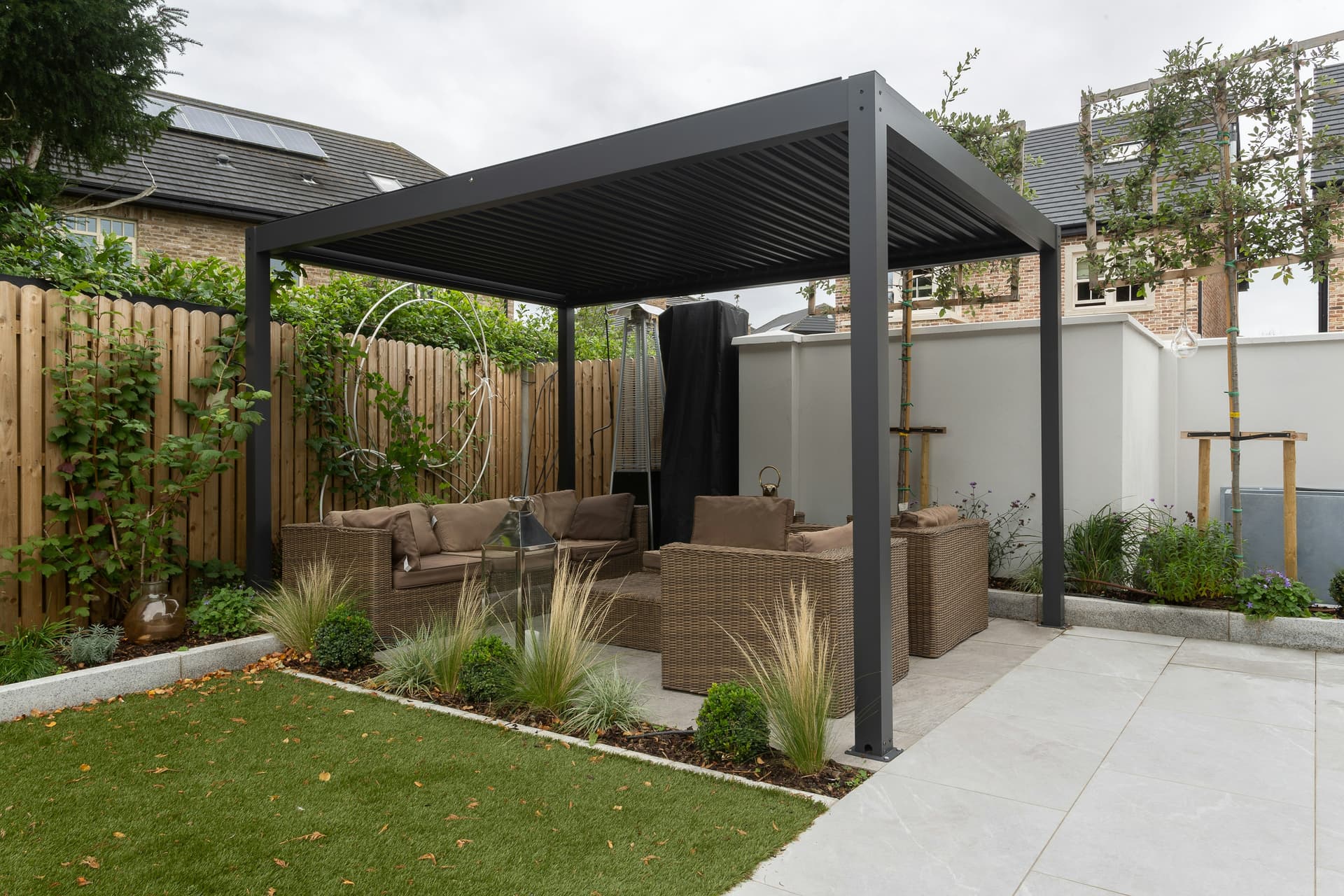
The most expensive mistake a Mediterranean villa garden can make is to be unusable in August. Shade is a 10 °C climate intervention — the single most important design element — and it should be planned first, not last.
 Design
Why Your Bougainvillea Won't Bloom: The Counter-Intuitive Rules for Coaxing the Colour Back
Bougainvillea is a bloom-on-stress plant. Everything you would do for a normal flowering shrub — rich soil, steady water, regular feeding — tells it to stay in leaf. Here is how to do the opposite.
Editorial & digital direction
Written, designed, and built by MHD ZUHIR MADAMANI · Istanbul