Buying Mature Trees for Instant Landscape: What Nobody Tells You
You want a garden that looks twenty years old on move-in day. It is possible. It is also where the biggest mistakes in villa landscaping happen. Here is what the atelier does differently.

Photo: Unsplash
The villa is finished. The pool is filled. Family and guests arrive next month. The garden is a bare lawn with three small trees in buckets. The client asks, understandably: "Can we buy mature trees to make it look like a real garden?"
Yes. But the honest conversation that follows, if the architect or landscaper is competent, is about what "mature" actually means, what it costs, what it risks, and what it fundamentally cannot do. Most of the catastrophic landscape failures we are called to repair started with a mature tree purchase that nobody explained properly.
This essay is that conversation, written so that anyone planning a villa garden can have it with themselves before they spend the money.
What "mature" actually means in the market
"Mature tree" covers three very different categories, and the price difference between them is enormous:
Semi-mature (4 to 6 metres, 10 to 20 years old): The standard specification for villa gardens that want immediate presence. Trees of this size can be container-grown or field-dug, transported on a truck, and planted with a small crane. The root-to-canopy ratio is favourable; survival rate in skilled hands is above 90 percent.
Expected cost per tree in Türkiye (2026):
- Olive, semi-mature multi-stem: €800 to €3,500
- Cypress, Italian, 5 m: €300 to €700
- Magnolia grandiflora, 4 m: €800 to €1,800
- Mature Japanese maple: €1,500 to €5,000
Mature specimen (6 to 12 metres, 30 to 80 years): Significant landscape trees. These are typically field-dug under a contract that includes a preparation year (root pruning — see our transplant guide). Transport requires a specialist lorry and crane; planting requires site preparation weeks in advance.
Expected cost:
- Heritage olive, 80 to 150 years: €4,000 to €15,000
- Stone pine, mature: €2,500 to €6,000
- Cedar of Lebanon, 30 years: €3,000 to €8,000
Heritage / exceptional (trunks above 80 cm diameter, 100+ years): These are one-of-a-kind trees. Market is smaller, prices are much higher, logistics are significant. They come with full documentation (provenance, age, health records).
Expected cost:
- Century-old olive specimen: €8,000 to €35,000
- Exceptional multi-stem heritage olive (400+ years, signature piece): €25,000 to €100,000+
What nobody tells you — the real cost
The tree price is roughly 40 to 60 percent of the total cost. Here is the rest:
Preparation year: If the tree is being field-dug rather than container-grown, a year of root-pruning preparation is required for the tree to survive transplant. This typically adds €500 to €2,500 per major specimen.
Transport: For a 5-metre tree with a root ball, specialist lorry and crane for a day cost €1,000 to €3,000. For heritage specimens with a large root ball and escort vehicles, €3,000 to €10,000.
Site preparation: The planting pit must be excavated, drainage installed, soil amended, and, in many Istanbul villa cases, access created by removing and later reinstalling boundary walls or garden features. €500 to €5,000 per tree depending on site.
Installation: Crane operator, planting team, first watering, staking. €500 to €2,500 per tree.
Year 1 aftercare: A mature transplanted tree is high-risk in its first year. It needs weekly supervision, specialised irrigation, and monitoring for pest or disease. €1,000 to €3,000 per tree for the first year.
Insurance and replacement guarantee: Reputable nurseries offer a one-year replacement guarantee on mature specimens — usually at 8 to 15 percent premium on the purchase price. Without this, you are carrying the transplant risk yourself.
A single semi-mature olive installed on a Çekmeköy villa commission might break down as: €2,000 tree + €500 transport + €1,500 site prep + €500 installation + €1,500 year-one aftercare + €200 insurance = €6,200 total. The tree cost is one-third of that.
Clients who see only the tree price and not the installation package frequently end up with dead trees. Be wary of prices that seem spectacular — something is almost always missing from the quote.
The three mistakes we repair constantly
Across villa projects in Türkiye, the Gulf, and the Levant, these are the three mistakes we consistently have to correct from previous "mature tree" purchases:
Mistake 1: the wrong tree for the microclimate. A client wanted Magnolia grandiflora at their Çekmeköy villa. A contractor sold them three 5-metre specimens. Two were planted in full afternoon sun on a south-facing slope with thin soil. Both burnt through their first summer; one died. The tree is beautiful — it needs a cooler, richer root zone than the site offered. No amount of watering rescued them.
Mistake 2: the wrong root-ball-to-canopy ratio. Cheap mature trees are cheap because they were not prepared. The tree arrives with inadequate roots; the canopy has no water supply to meet its needs; leaves burn, branches die back. A year later the tree is half the specimen it was when purchased. This is the most common failure, and it is always a false economy.
Mistake 3: planting at the wrong time of year. Summer planting of a mature tree in Istanbul or the Gulf is a death sentence unless very specific conditions are met (container-grown, continuous shade until autumn, daily supervision). Most mature trees should be planted in autumn (October to November) or late winter (late February to early March). Clients who want a garden "for summer entertainment" sometimes insist on summer installation. We turn down this work when we cannot guarantee survival.
What the atelier does differently
On NAS commissions, the mature tree protocol is:
1. We supply from our own nursery, or a trusted specialist partner. The provenance is documented: where the tree came from, when it was dug (or potted), what preparation has been done. The buyer knows exactly what they are getting.
2. We match trees to the specific microclimate. Before recommending any species, we assess the actual site — soil, sun, wind, slope, frost pocket potential. A tree that will struggle in the location does not leave the nursery, regardless of how much the client loves it.
3. We install with our own team. The same people who select the tree, supervise its preparation, and plant it are the people who return in year one to care for it. Accountability is continuous.
4. We price the full package transparently. The client sees every line item: tree cost, transport, site preparation, installation, year-one care, insurance. No hidden costs. No "the contractor didn't tell us about that."
5. We guarantee survival for year one. If a tree we supplied and installed fails in the first twelve months, we replace it at no cost — provided the client has followed the watering schedule we specified.
When mature trees are right — and when they are wrong
Mature trees make sense when:
- You have a specific visual moment that matters in the first two years (a client moving in, a wedding venue, a hotel opening)
- The site can accept the logistics (access, utility lines, space for the crane)
- The budget reflects the full cost, not just tree purchase
- A skilled team is responsible for installation and aftercare
Mature trees are wrong when:
- The budget only covers the tree, not the installation and aftercare
- The site is landlocked with no crane access
- The client is unwilling to invest in the preparation year for heritage specimens
- The species is marginal for the climate
- The client is expecting "instant mature" to look like a 40-year-old established garden (it won't — even mature trees take 2 to 3 years to integrate visually and root into place)
The honest middle ground for most villa gardens is a mix: a few mature specimens for immediate presence (perhaps three to five trees), combined with a fuller programme of semi-mature and younger stock that grows into a richer garden over 3 to 5 years. This looks good on day one and spectacular by year five.
What we supply from the nursery
NAS's nurseries in Türkiye and the Levant hold a working inventory of:
- Heritage olive specimens (40 to 400+ years)
- Semi-mature olives (multi-stem and single trunk)
- Bonsai olives in various training stages
- Mediterranean cypress, pine, bay, pomegranate, carob
- Palms (date, Canary) for Gulf commissions
Every specimen is photographed, measured, and documented. Before we install on a client site, the client sees the exact tree at the nursery first. No surprises.
If you are planning a villa garden where mature trees play a central role, send us a site plan and your expectations on WhatsApp +90 535 422 5227. A real landscape architect will propose a mature-tree strategy the same working day — honest about costs, honest about what the garden will look like in year one, year three, and year ten.
NAS Landscape supplies and installs mature and heritage trees from its own nurseries across Türkiye and the Levant, for villa commissions across seven countries. Established 1965, Damascus. Written by MHD ZUHIR MADAMANI, Istanbul.
◆ A real diagnosis, not a guess
Send a photo. Get a plan.
Our specialists handle cases like yours across Istanbul and the wider region. Share a photo on WhatsApp or book a free site visit — whichever is faster for you.
60+ years · 7 countries · 500+ projects · third-generation atelier
◆ More field notes
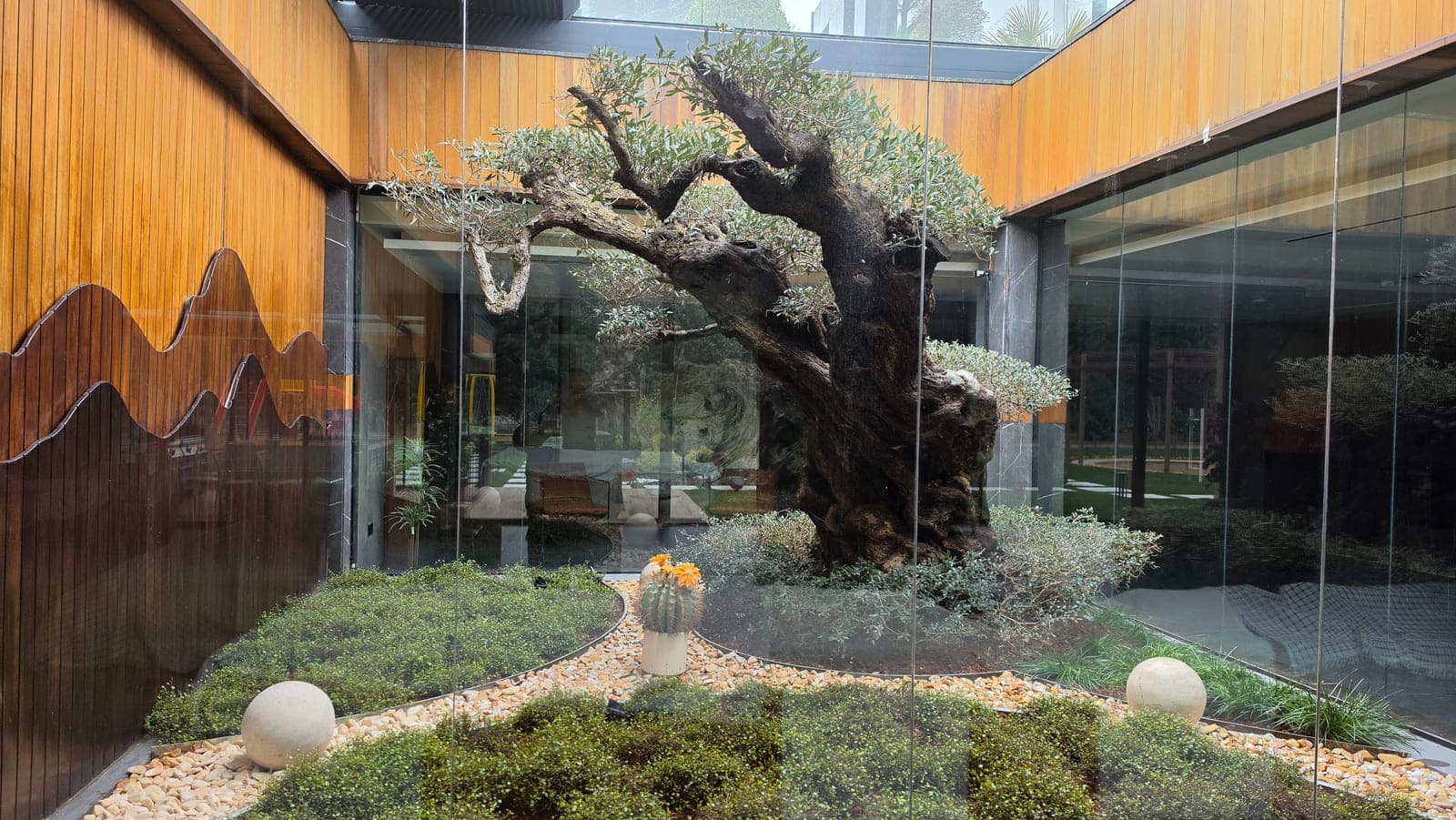 Craft & Heritage
How to Choose the Best Landscape Atelier in Istanbul: A Decision Framework
A villa garden is a fifty-year promise. The wrong atelier costs you twice — once in the planting, again in the replanting. Here is the framework we wish every villa owner used before signing the contract — five markers of a real atelier, four questions to ask, and the red flags that should send you walking.
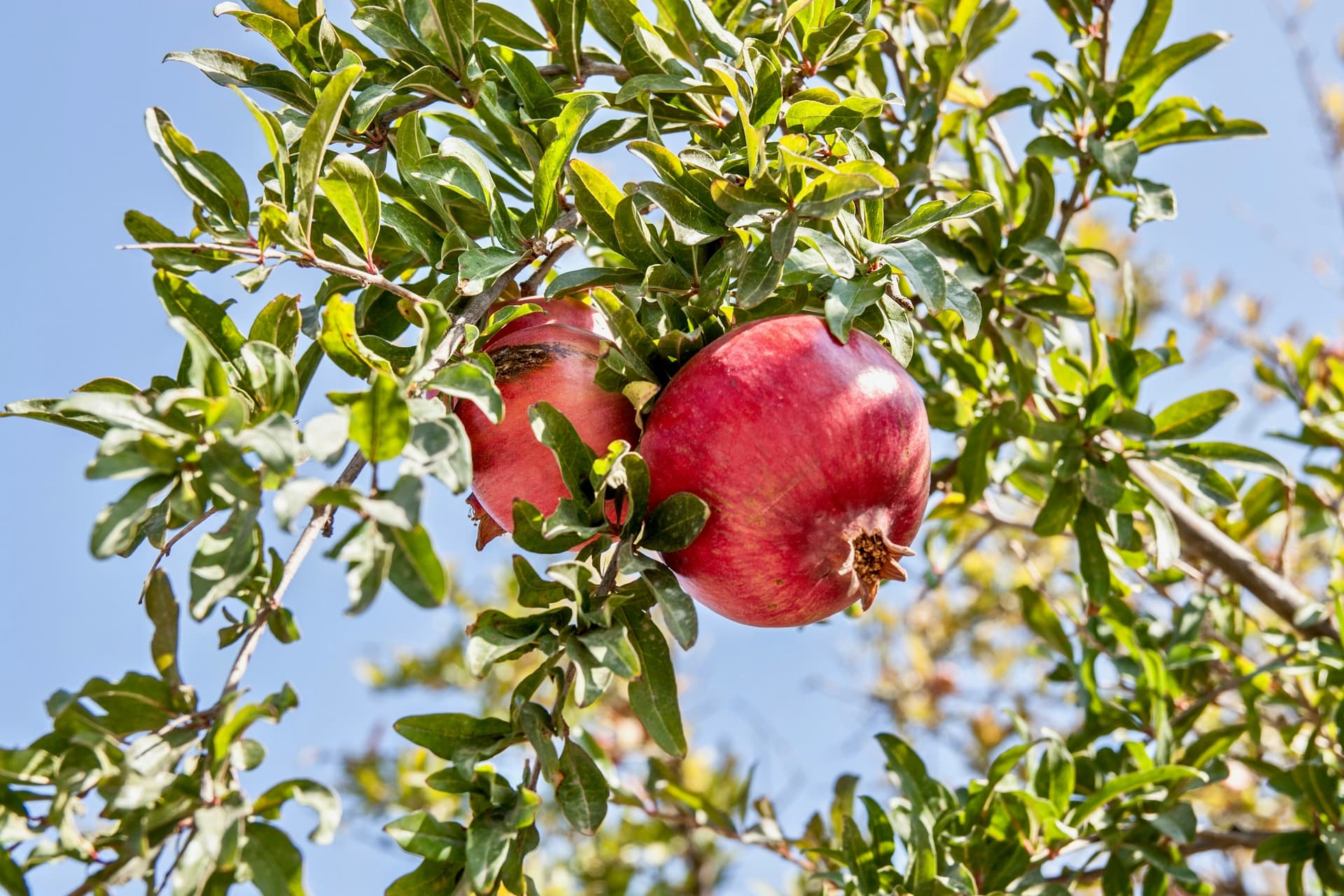 Craft & Heritage
The Pomegranate Tree: Heritage, Symbol, and the Fruit on Your Table
The pomegranate is not a tree for landscaping. It is a decision about where a family sits in relation to its memory. Seven thousand years of domestication, twelve centuries of Andalusian selection, and why we still plant it on every villa commission.
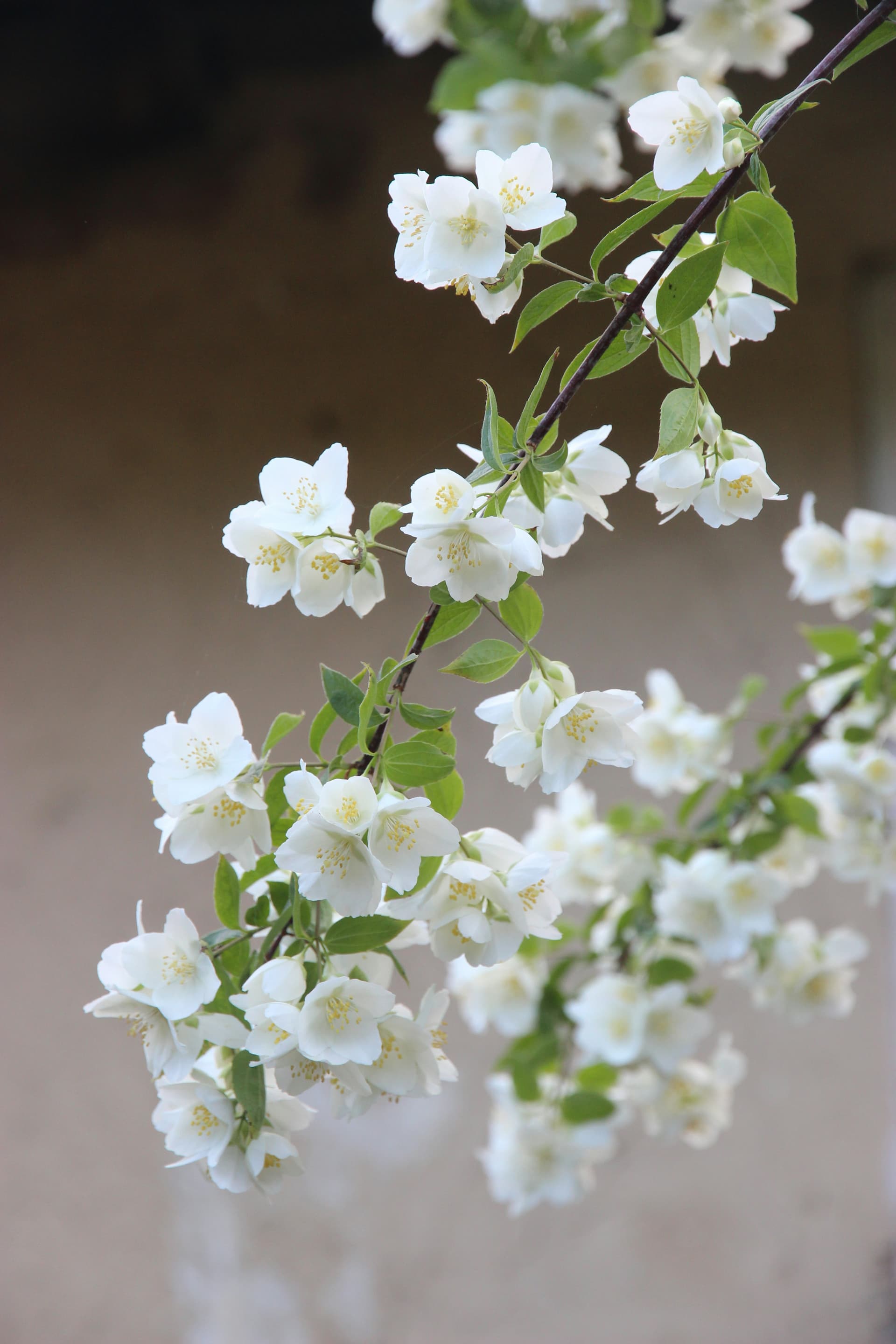 Craft & Heritage
Jasmine: The Fragrance That Built NAS
In 1965 the first nursery in Syria was named Mishtal Al-Ful Wal Yasmin — the Nursery of Jasmine — after a tree the founder's wife loved. Sixty years on, jasmine is still at the centre of what we do and why.
Editorial & digital direction
Written, designed, and built by MHD ZUHIR MADAMANI · Istanbul