Citrus Trees for Villa Gardens: Planting, Problems, and the Varieties That Actually Work
A lemon tree in a Mediterranean villa is either a small domestic miracle or a sad yellow thing dropping leaves. The difference is knowing what citrus actually want — and recognising the five patterns when they don't get it.
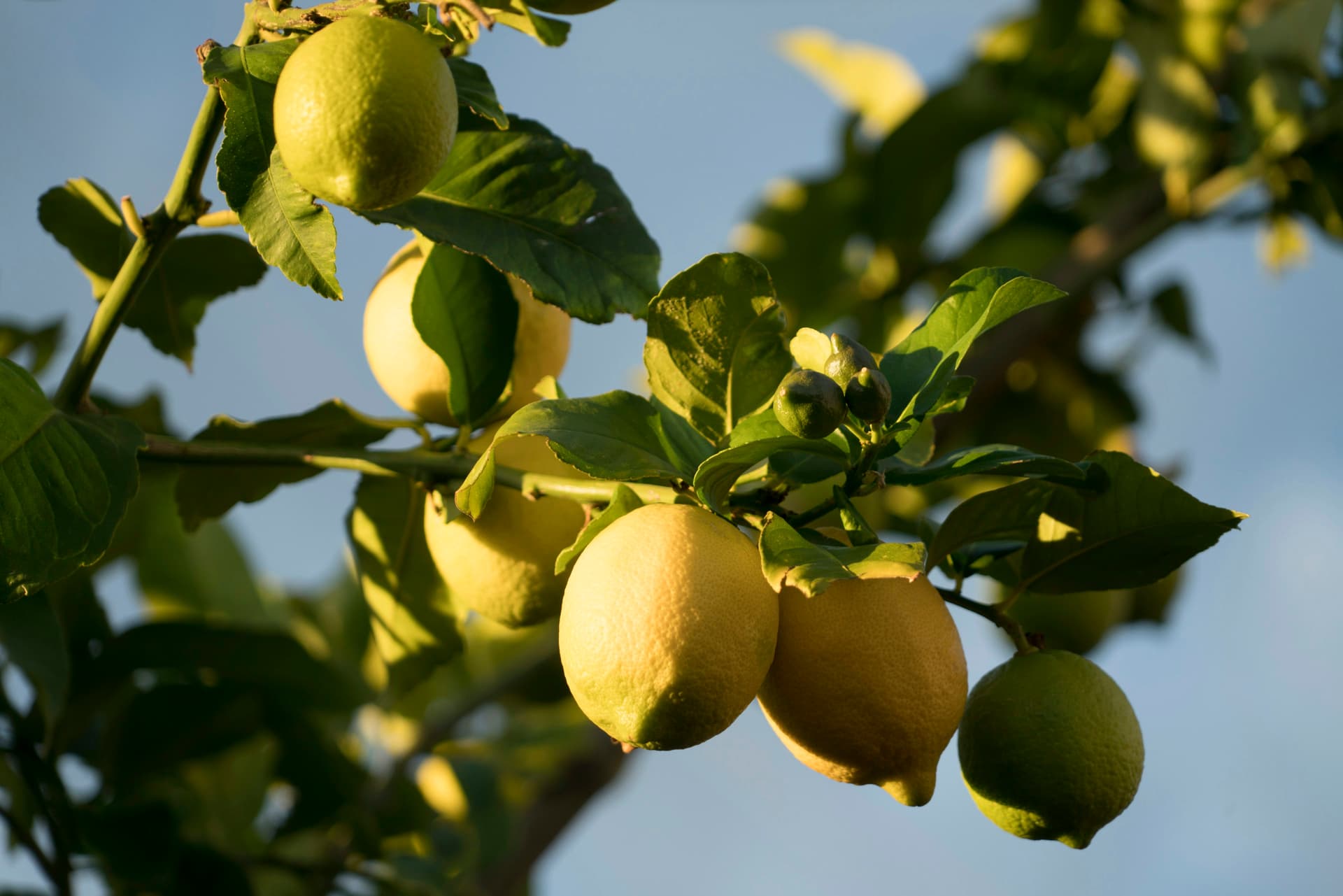
Photo: Unsplash
Having this problem in your own garden?
Get a free site visitA lemon tree in a Mediterranean villa garden is a small domestic miracle: a plant that lives eighty years, flowers and fruits at the same time, perfumes a whole terrace in May, and — when the owner does everything right — hands you five or six hundred lemons a year. A lemon tree in a Mediterranean villa garden is also, on roughly half the sites we visit, a sad yellow thing dropping leaves and producing two sour fruits by November.
Citrus are not difficult plants. They are specific plants. They do exactly what they are asked to do if you understand what they want — and they fail in predictable, diagnosable ways when you do not.
This field note is the version of the conversation we have with villa clients when the citrus is declining. What to plant, which varieties actually work in our climates, the diagnostic sequence when a tree is struggling, and the winter protocol that keeps them alive in Istanbul as well as Jeddah.
Which citrus — the short working list
There are two hundred named citrus cultivars commercially available. You need four or five, picked for your site and your purpose. The rest is noise.
For a villa table — fresh fruit, kitchen use:
- 'Eureka' lemon — year-round fruiting, the most reliable lemon in Mediterranean and Levantine gardens. Our default.
- 'Meyer' lemon — sweeter, thinner skin, smaller tree, lower cold tolerance. Ideal in pots and protected Istanbul courtyards.
- 'Washington Navel' orange — classic winter orange, seedless, heavy cropper.
- 'Valencia' orange — summer-ripening juice orange, commercial standard in the Levant and the Gulf.
- 'Clementine' mandarin — compact, reliable, perfect for pots and small villa plots.
For fragrance, bloom and ornament more than fruit:
- 'Seville' bitter orange (Citrus × aurantium) — the classical Andalusian courtyard tree. Heavy bloom, bitter fruit for marmalade, immune to most diseases. Still planted in Damascene riads and Marrakech courtyards for good reason.
- Kaffir lime (Citrus hystrix) — leaves for cooking, unusual form, heavy scent.
- Citron (Citrus medica) — the original citrus, culturally significant, large fragrant fruits.
What we specifically do not recommend planting in most villa gardens:
- Grapefruit — too large, too slow, and the cold-tolerance is worse than sweet orange in Istanbul. Buy grapefruit at the market.
- Lime (Citrus aurantiifolia) — minimum cold tolerance; dies below 0 °C. Only plant in frost-free coastal Gulf or the Aegean shore.
- Cumquat — novelty tree, rarely produces anything useful, always looks slightly sickly.
The three absolute requirements
A citrus tree wants three things and is forgiving of almost nothing else. Get these right at planting time and you do not have a problem tree — you have an eighty-year one.
1. Sun, full and direct
Six hours minimum of direct summer sun, preferably eight or more. Citrus planted in partial shade will live but not fruit; citrus planted in heavy shade will slowly decline and die over five to seven years.
The classic Istanbul villa mistake is planting a lemon on the north side of the house "because it's sheltered". Sheltered from what — the light it needs? Move the tree, or plant a different species there.
2. Drainage — citrus hate wet feet
Citrus evolved on well-drained foothills in Southeast Asia and later in the Levant. Heavy clay, compacted soil, or poor drainage produces root rot, yellowing, and eventual death within three years.
Our planting protocol:
- Dig a hole twice the root-ball width and 1.5 times its depth
- If the site tests heavy clay, excavate further and rebuild a raised planting mound 30 cm above the surrounding grade with a free-draining mix (60% screened topsoil, 30% coarse grit or decomposed granite, 10% well-aged compost)
- Never sit a citrus at the bottom of a low spot where water collects
- Mulch with wood chip 5 cm deep, pulled back 15 cm from the trunk
3. Regular — not heavy — feeding
Citrus are moderately hungry trees. A young tree in the ground wants a balanced citrus fertiliser four times a year: February, May, July, and September. An established tree wants the same schedule but at half the rate. Skipping feeding is the second-most-common reason for a pale, unproductive lemon.
Never feed after mid-September in Istanbul or the Levantine highlands — late nitrogen pushes soft growth that freezes in the first cold snap. In the Gulf we stop in late October.
◆ NAS Landscape
Not sure if this applies to your garden?
The four causes above look alike from a distance but need different treatments. A 30-minute site visit from our specialist gives you the right answer — no guessing.
Request a free diagnosisThe diagnostic — when a citrus is not thriving
The ways citrus go wrong are classifiable. Here are the five patterns we see most often and what each means.
Pattern 1: Uniformly pale yellow leaves
Nitrogen deficiency, 90% of the time. Citrus is nitrogen-hungry and strips it from old leaves first to feed new growth.
The fix: A proper citrus fertiliser at the label rate for the tree size. Results in three to four weeks. If no improvement, it is probably cause 2 or 3.
Pattern 2: Yellow leaves with dark green veins (pure chlorosis pattern)
Iron deficiency. Alkaline soils (pH 7.5+) lock iron away from the roots even when it is present. This is the default soil chemistry in Istanbul, most of the Gulf, and much of the Levant.
The fix: A chelated iron application — specifically iron EDDHA, which is the only chelate that works reliably above pH 7 — applied to the soil and watered in. One correct application shows green leaves in four weeks. Repeat annually in spring.
Pattern 3: Leaf drop, twig dieback, soft/soggy roots at the base
Root rot, almost certainly Phytophthora. Caused by overwatering, poor drainage, or both.
The fix: Immediately cut irrigation. Investigate drainage. If the tree still has some green growth, apply a soil drench with potassium phosphite (ring a reputable supplier for the right formulation). In bad cases we have saved mature lemons by excavating the root zone, installing drainage, and replanting.
Pattern 4: Sticky leaves, sooty black coating, ants
Scale insects or aphids, producing honeydew that attracts sooty mould. The mould itself does not kill the tree — the insects do, by sucking sap.
The fix: Two thorough applications of horticultural oil (neem or canola) ten days apart, soaking the underside of every leaf and every branch. Systemic insecticide only for heavy infestations and only via a licensed applicator. Control the ants — they farm the scale and protect them.
Pattern 5: Fruit drops green, or ripens but is dry/pithy
Water stress. Citrus fruit development is extraordinarily sensitive to irregular water. A dry spell followed by heavy water produces split fruit. Constant underwatering produces dry pithy fruit.
The fix: Install drip irrigation on a regular schedule. Twice a week in peak summer, once a week in shoulder seasons, monthly in winter if rainfall is low. Mulch deeply. Consistency beats quantity.
The winter protocol — keeping citrus alive
In Istanbul, the Levantine highlands, and inland Turkish gardens, winter is where citrus earn their "difficult" reputation. Our protocol for clients on villa contracts:
Young trees (under three years): Frost fleece draped over the tree on any forecast night below 0 °C. Stake it off the foliage with three bamboo canes. For potted young citrus, move inside to an unheated garage or protected veranda whenever temperatures drop below 2 °C.
Established trees (four to fifteen years): Usually hardy to -4 °C if properly hardened off (no late feeding, deep watering two days before a cold snap). Below that, a tarp or frost fleece over the canopy. Trunk wrapping in burlap for the coldest nights.
Mature trees (fifteen-plus years): Generally hardy to -6 °C. Protect only in exceptional cold events. The tree's own mass buffers a lot.
The pot option — citrus as container plants
A citrus in a large terracotta pot is one of the most useful plants in a Mediterranean terrace vocabulary. It gives you fruit and fragrance, can be moved for winter protection, and takes an architectural position on a terrace that an in-ground plant cannot.
Pot requirements:
- Minimum 60 cm diameter, 50 cm depth — citrus roots want room
- Terracotta, not glazed or plastic — breathable, prevents the roots from cooking in summer
- Free-draining high-quality citrus potting soil, never garden soil
- A saucer at the bottom ONLY in winter when indoors; outside, never — stagnant water in the saucer kills citrus
- Re-pot every three years, spring, same pot size (root-prune 10% of the root system) or go up one pot size
Container citrus want more frequent feeding — every two weeks with a dilute citrus liquid fertiliser, April through September.
Where the atelier fits
NAS has sourced, planted, and maintained citrus trees across Türkiye, the Levant, and the Gulf for three generations. Our inventories practice includes heritage citrus — old Damascene Seville oranges, an unusual citron cultivar we propagate for Istanbul courtyards, Meyer lemon mother stock for pot cultivation — that commercial nurseries do not carry.
If you are planning a citrus grove on an estate, a small family orchard in a villa garden, a pair of Seville oranges for a traditional courtyard, or a pot programme for a Bosphorus terrace, the work begins with site survey and variety selection.
When to call us
Call the atelier when:
- Your citrus has been declining for a season despite standard care and you are not sure which of the five patterns above applies
- You are planning a citrus grove or orchard on a new estate and want the right varieties, correct spacing, and hardened root stock
- You want a mature citrus transplanted into a new garden (we have moved Seville oranges of forty years between Damascene courtyards)
- You are restoring an old-city courtyard and want the traditional citrus palette sourced and planted correctly
A villa garden with a working citrus tree is a permanent source of fruit, flower, and fragrance. Send a photo and a brief description to WhatsApp +90 535 422 5227 — a real landscape architect will look at it the same working day. No charge for the first read.
NAS Landscape has sourced and maintained citrus trees across Damascus, Istanbul, Amman, Jeddah, and Marrakech since 1965. Written by MHD ZUHIR MADAMANI, Istanbul.
◆ A real diagnosis, not a guess
Send a photo. Get a plan.
Our specialists handle cases like yours across Istanbul and the wider region. Share a photo on WhatsApp or book a free site visit — whichever is faster for you.
60+ years · 7 countries · 500+ projects · third-generation atelier
◆ More field notes
 Craft & Heritage
How to Choose the Best Landscape Atelier in Istanbul: A Decision Framework
A villa garden is a fifty-year promise. The wrong atelier costs you twice — once in the planting, again in the replanting. Here is the framework we wish every villa owner used before signing the contract — five markers of a real atelier, four questions to ask, and the red flags that should send you walking.
 Craft & Heritage
The Pomegranate Tree: Heritage, Symbol, and the Fruit on Your Table
The pomegranate is not a tree for landscaping. It is a decision about where a family sits in relation to its memory. Seven thousand years of domestication, twelve centuries of Andalusian selection, and why we still plant it on every villa commission.
 Craft & Heritage
Jasmine: The Fragrance That Built NAS
In 1965 the first nursery in Syria was named Mishtal Al-Ful Wal Yasmin — the Nursery of Jasmine — after a tree the founder's wife loved. Sixty years on, jasmine is still at the centre of what we do and why.
Editorial & digital direction
Written, designed, and built by MHD ZUHIR MADAMANI · Istanbul