The Pomegranate Tree: Heritage, Symbol, and the Fruit on Your Table
The pomegranate is not a tree for landscaping. It is a decision about where a family sits in relation to its memory. Seven thousand years of domestication, twelve centuries of Andalusian selection, and why we still plant it on every villa commission.
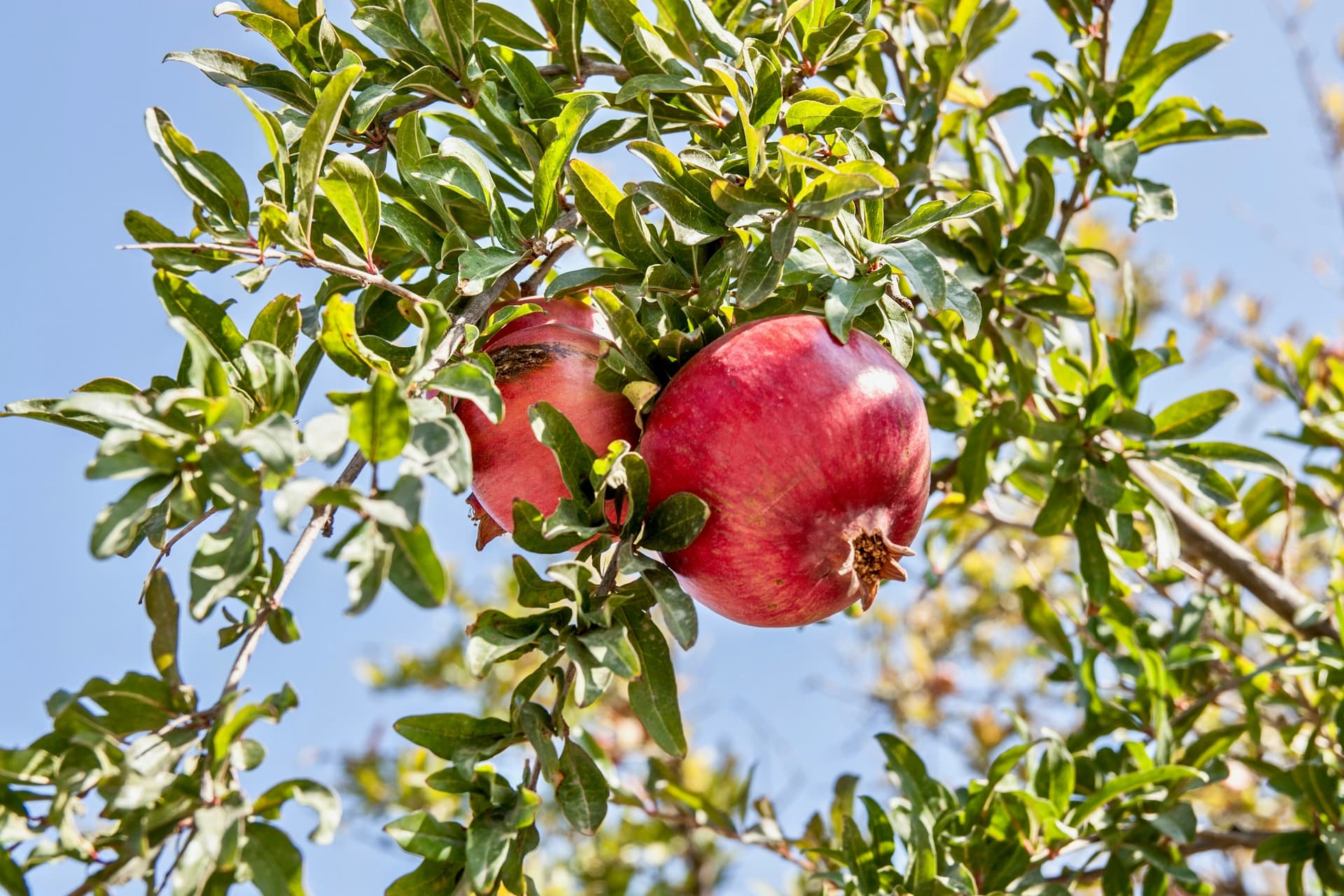
Photo: Unsplash
There is a pomegranate tree in the courtyard of the house my grandfather grew up in, in Daraya, outside Damascus. It was planted in the 1940s — a wedding gift. It survived three generations of family weddings, two civil wars, and the diaspora of the family that surrounded it. The last time I stood under it was in autumn, and the fruits were breaking open on the branches. The tree did not know the family had mostly left. It simply fruited, as a pomegranate has always done when the season is right.
This is not a tree you plant for landscaping. A pomegranate is a decision about where a family sits in relation to its own memory. No other fruit carries the same weight in our region — it is the fruit in the Quran, the pomegranate of Demeter's descent into Hades, the pattern on the Umayyad marble, the symbol over the gates of old Damascus, the last fruit the Prophet Muhammad is said to have tasted. You plant a pomegranate and you are taking a position on what a garden is for.
This essay is for the client who has been offered a pomegranate by a nursery, stood in front of it, and felt a pull they did not fully understand. It is about what the tree actually asks from you, what it gives back, and why we still plant it in Damascus, in Istanbul, in Jeddah, and in Marrakech on nearly every villa commission we touch.
A short history, for context
Punica granatum is one of the oldest cultivated fruit trees in human history. It was domesticated somewhere between Iran, the Caucasus, and Northern Iraq around 5,000 BC. By the time of the Bronze Age palaces it had spread across the entire Mediterranean basin. The Phoenicians called it rimmon; the Romans called it malum punicum, the Punic apple, after Carthage. Andalusian Spain had 600 named varieties in the tenth century.
What this means practically is that the pomegranate has been selected, crossed, and refined for seven thousand years to thrive in exactly the climate you probably live in. It is not a tree you are coaxing into difficult conditions — it is a tree that evolved in your difficulty. Hot summers. Stony soil. Alkaline ground. Unreliable winter rain. The pomegranate asks for these things.
The choice of variety — which pomegranate
This is the question most owners never ask, and the one the atelier asks first. There are really three categories of pomegranate, and they are suited to different purposes.
Heritage fruiting varieties — for serious pomegranate harvest:
- 'Wonderful' — the American commercial standard, heavy juicy red fruit, October ripening. Reliable and productive. Our default for Gulf estate fruit orchards.
- 'Mollar de Elche' — Spanish variety, soft-seeded, exceptional flavour, somewhat slower to bear but unmatched on the table.
- 'Hicaznar' — Turkish variety, enormous fruits, ripens well in Aegean coastal gardens, bred for the Antalya climate.
- 'Malasi' — Syrian heritage variety, sweet-sour balance, very productive in the 600-1200 m altitude band across the Levant.
Ornamental varieties — for flowering, not fruiting:
- Punica granatum 'Nana' — dwarf, 1.5 m at maturity, brilliant orange flowers all summer, fits in a large pot. The choice for terraces, courtyards, and small formal gardens.
- 'Double Red' — heavily doubled flowers like small red peonies, ornamental only, sets no useful fruit. For atmosphere, not harvest.
Bonsai forms — for serious collectors:
- Dwarf Punica granatum 'Nejikan' — the classic bonsai pomegranate, trained for forty years on a root over rock, produces miniature fruit. This is the inventories work our Damascus nursery has held alive for three generations.
Most disappointments with a pomegranate tree in a villa garden come from a mismatch of variety and intention: the client wanted a heritage-fruit tree and was sold an ornamental, or wanted an ornamental and was sold a heavy-cropper whose fruit weigh down and crack the branches.
The planting — what the tree actually needs
A pomegranate will tolerate most conditions, but to thrive — to live seventy years and fruit every autumn — it wants a specific set. This is not optional:
Sun. Six hours of direct sun daily, minimum. Eight or more is better. Pomegranates grown in shade are sparse, weakly-fruited, susceptible to every disease on the list.
Drainage. Free-draining soil, ideally gravelly or sandy, slightly alkaline (pH 6.5 to 8). Wet feet kill pomegranates faster than drought. If your site is heavy clay, we build a raised planting mound 40 cm above the surrounding grade and backfill with a free-draining blend.
Protection from hard frost. A pomegranate is cold-hardy to about -10 °C for a mature established tree. Young ones — first three winters — want a burlap wrap on nights below -4 °C, especially in Istanbul and the inland Levant.
Room. A heritage fruiting variety wants 4 to 5 m clearance from any structure. The tree reaches 5 m tall and 4 m wide at maturity. In a small courtyard we specify 'Nana' in a large terracotta pot instead.
Water — the first three years only. A young pomegranate needs consistent deep watering every ten days for its first three summers to establish. After that it is almost self-sufficient. Over-watering an established pomegranate drops the fruit and cracks what remains.
The flowering — a garden event worth marking
From late May through early August a mature pomegranate is in bloom, and the flowering is an event worth planning a villa garden around. The blossoms are brilliant orange-red, funnel-shaped, held on the tips of the branches like small trumpets. Hummingbird-sized lanterns.
Most of the flowers are male and will fall without setting fruit. About one in ten is a perfect bisexual flower with a swollen ovary at the base — this is the fruit to come. The tree seems profligate, but it is actually a known reproductive strategy: over-produce flowers, let the tree choose which to invest in based on its resources that year.
A heavy flower drop in early summer is not a problem. It is the tree editing.
The fruit — and the autumn ritual
A heritage pomegranate ripens from late September through late October, depending on variety and altitude. In the old Damascene houses, the rimmon was harvested on a ladder over the courtyard, with a linen cloth laid beneath to catch any that fell. The harvest was a family event.
The fruit is ripe when:
- The skin has developed its full colour (deep red, or variety-specific)
- Tapping the side produces a metallic sound rather than a dull thud
- The crown at the base of the fruit has started to split slightly and dry
- The first fruits on the tree have already cracked open on the branch
Do not pick early. Unlike many fruits, a pomegranate does not continue to ripen off the tree. Pick too early and the fruit is sour and the seeds are pale.
Pruning — minimal, and done in winter
An established pomegranate needs almost no annual pruning. What it needs, once every three years in January or February:
- Remove any dead, diseased, or crossing branches
- Thin out the interior to allow light and air into the centre
- Remove suckers from the base — pomegranates want to be multi-trunk shrubs; if you want a single-trunk tree form, remove all suckers at ground level
What not to do: heavy annual pruning. The pomegranate flowers on short spurs produced on two-year-old wood. Cut that wood and you get no flowers, no fruit.
Disease and pest — the short list
Pomegranates are remarkably trouble-free in the right site. The few things to watch for:
- Pomegranate butterfly (Virachola livia) — its larvae bore into the fruit. Protects: bag individual fruits in paper or fine mesh during August-September. Mild infestation is common in the Gulf.
- Fruit cracking — not a disease, but a symptom of irregular water. Heavy rain after a dry spell causes fruits to split. Mulch deeply and water regularly in the month before harvest.
- Leaf-curling aphid — occasional in spring; knock off with a strong water jet, or spray horticultural oil if severe.
- Bacterial leaf spot (Xanthomonas) — rare in dry-summer Mediterranean climates, more common in humid coastal Gulf. Remove affected leaves, disinfect pruning tools.
We have maintained pomegranate trees on Gulf estates for three decades; losing one to disease is a rare event.
The garden question — where a pomegranate goes
The pomegranate is not a tree for the lawn. It is a tree for:
- The courtyard — traditional placement, often the centre, often paired with a jasmine or a citrus. Our Damascene restoration projects always specify the courtyard pomegranate.
- A kitchen garden — fruiting variety, near the herbs, accessible for harvest.
- The boundary — a heritage variety trained along a villa wall, fruit hanging at head height, reachable from the terrace.
- A large pot on a terrace — a dwarf 'Nana' variety, blooming brilliantly from May to August.
- A bonsai collection — a rare, old specimen, kept on a stone stand in a shaded corner of the study, or on a covered terrace.
We do not plant pomegranates in lawn, in formal rose parterres, or as specimen trees in a manicured front garden. The pomegranate is not ornamental in that sense — it is a food, a symbol, a family witness.
Where the atelier fits
NAS Landscape sources, plants, and maintains heritage pomegranate trees across Türkiye, the Levant, the Gulf, and North Africa. Our nursery specifically propagates three Syrian heritage varieties — Malasi, Lafan, and the Daraya courtyard selection — that no commercial nursery stocks because they do not ship well and yield is lower than modern cultivars. They are our inventories work, one of the three houses NAS has operated for three generations.
If you are planning a villa courtyard, a restored old-city house, a kitchen garden on an estate, or a pot for a large terrace, and the pomegranate is on your mind, send the site details to WhatsApp +90 535 422 5227. A real landscape architect will respond the same working day — and in the case of a pomegranate, will probably tell you a story about a tree we knew before getting to the recommendation. Pomegranates invite this.
NAS Landscape · Damascus 1965 · Istanbul today. The family's first nursery, registered in 1965, began with a jasmine; the pomegranates came the following year. Written by MHD ZUHIR MADAMANI.
◆ A real diagnosis, not a guess
Send a photo. Get a plan.
Our specialists handle cases like yours across Istanbul and the wider region. Share a photo on WhatsApp or book a free site visit — whichever is faster for you.
60+ years · 7 countries · 500+ projects · third-generation atelier
◆ More field notes
 Craft & Heritage
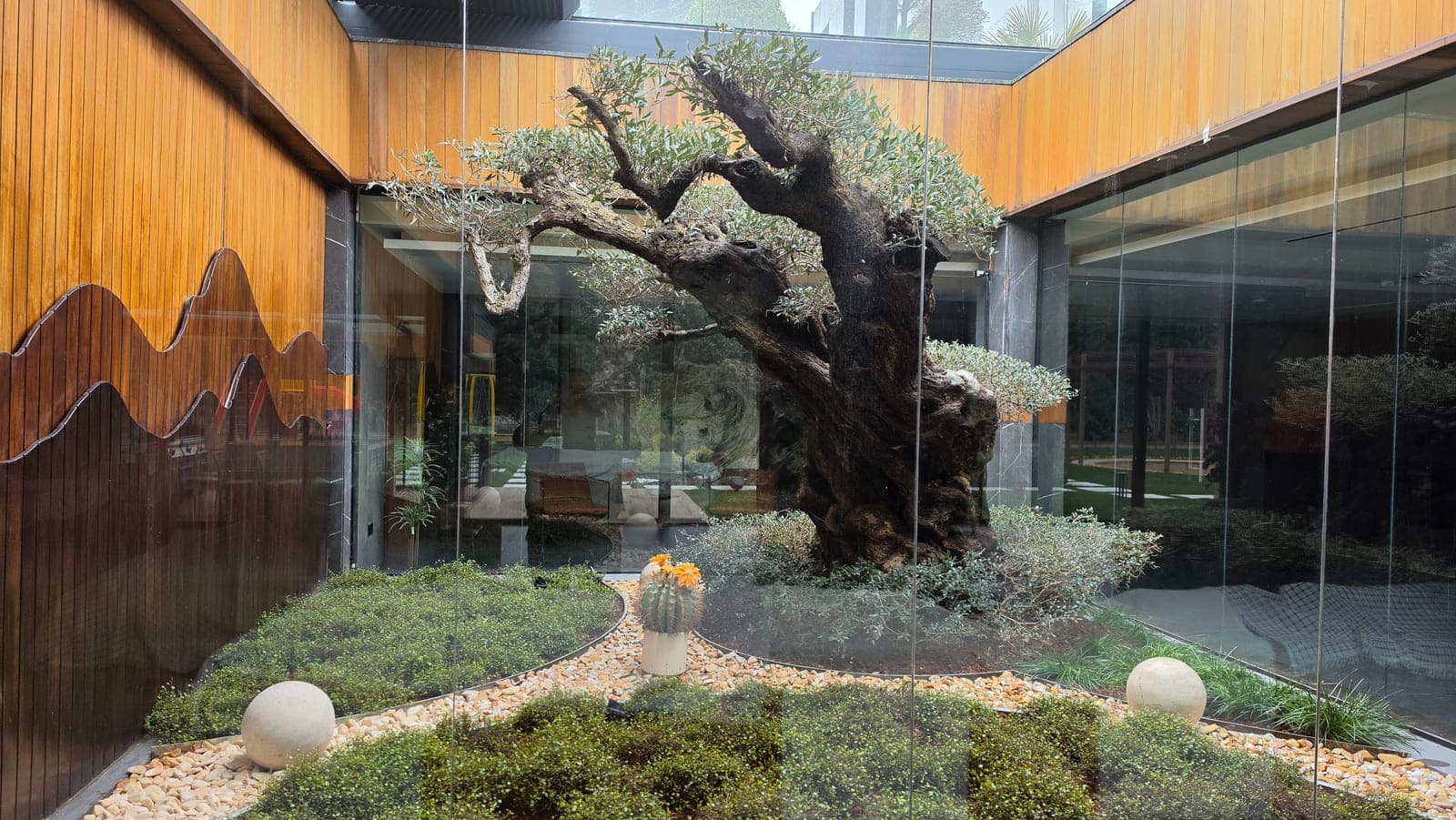
How to Choose the Best Landscape Atelier in Istanbul: A Decision Framework
A villa garden is a fifty-year promise. The wrong atelier costs you twice — once in the planting, again in the replanting. Here is the framework we wish every villa owner used before signing the contract — five markers of a real atelier, four questions to ask, and the red flags that should send you walking.
 Craft & Heritage
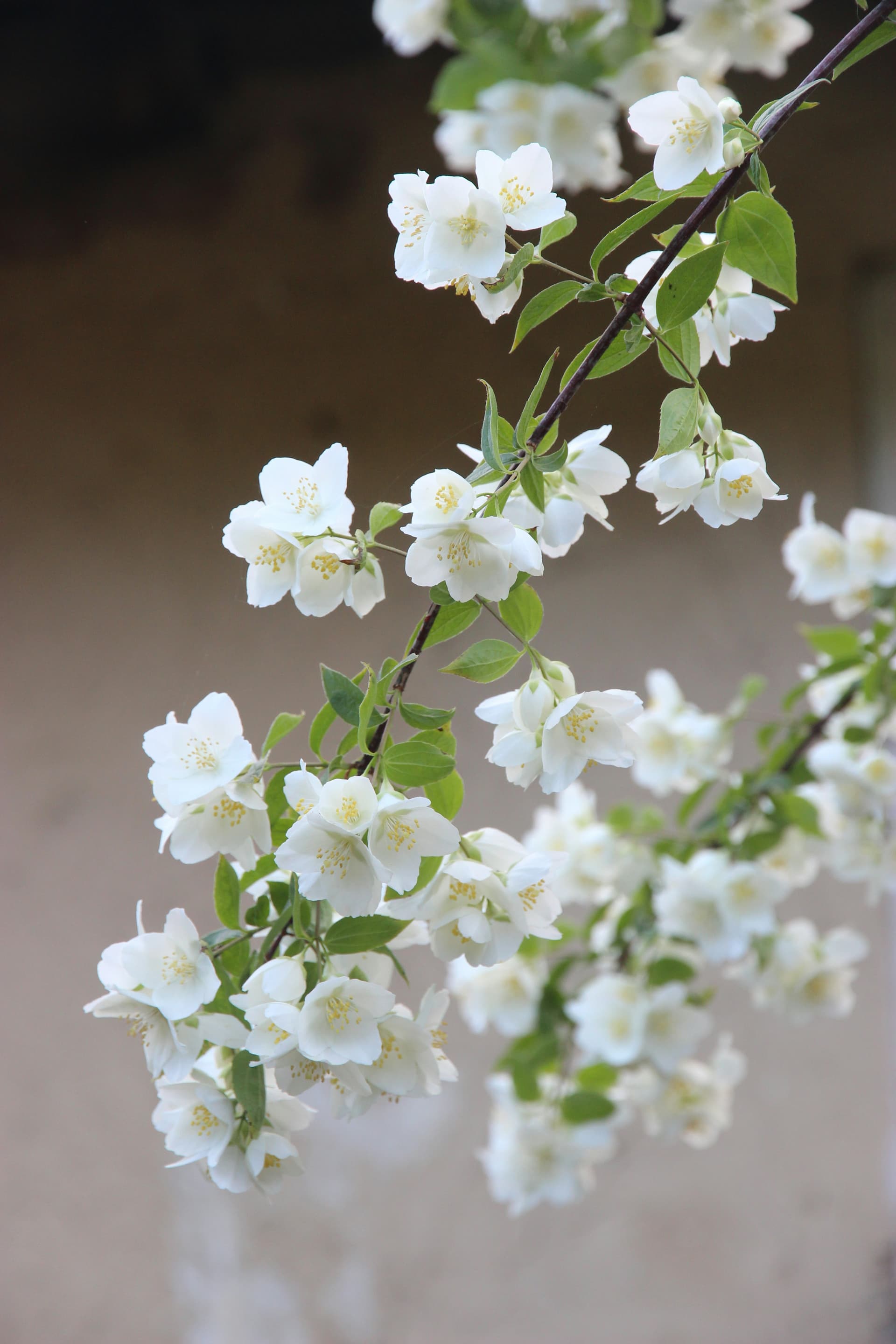
Jasmine: The Fragrance That Built NAS
In 1965 the first nursery in Syria was named Mishtal Al-Ful Wal Yasmin — the Nursery of Jasmine — after a tree the founder's wife loved. Sixty years on, jasmine is still at the centre of what we do and why.
 Craft & Heritage
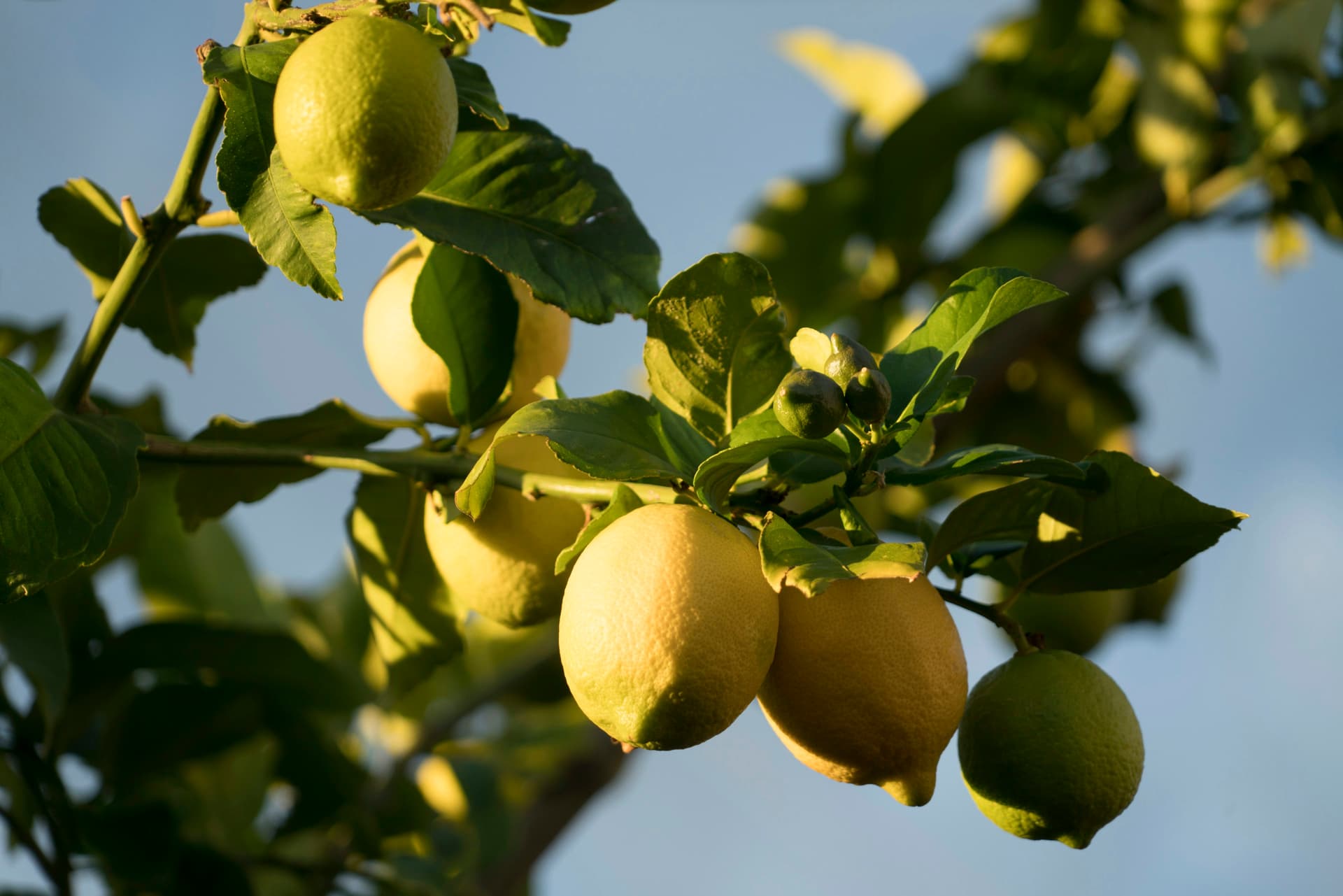
Citrus Trees for Villa Gardens: Planting, Problems, and the Varieties That Actually Work
A lemon tree in a Mediterranean villa is either a small domestic miracle or a sad yellow thing dropping leaves. The difference is knowing what citrus actually want — and recognising the five patterns when they don't get it.
Editorial & digital direction
Written, designed, and built by MHD ZUHIR MADAMANI · Istanbul