How to Plant a Cypress Hedge That Will Still Be Perfect in Twenty Years
A cypress hedge is a long conversation between a gardener and time. Almost every owner tries to shortcut it — and the hedge dies unevenly ten years later. Nine decisions that determine whether it stands for a generation.
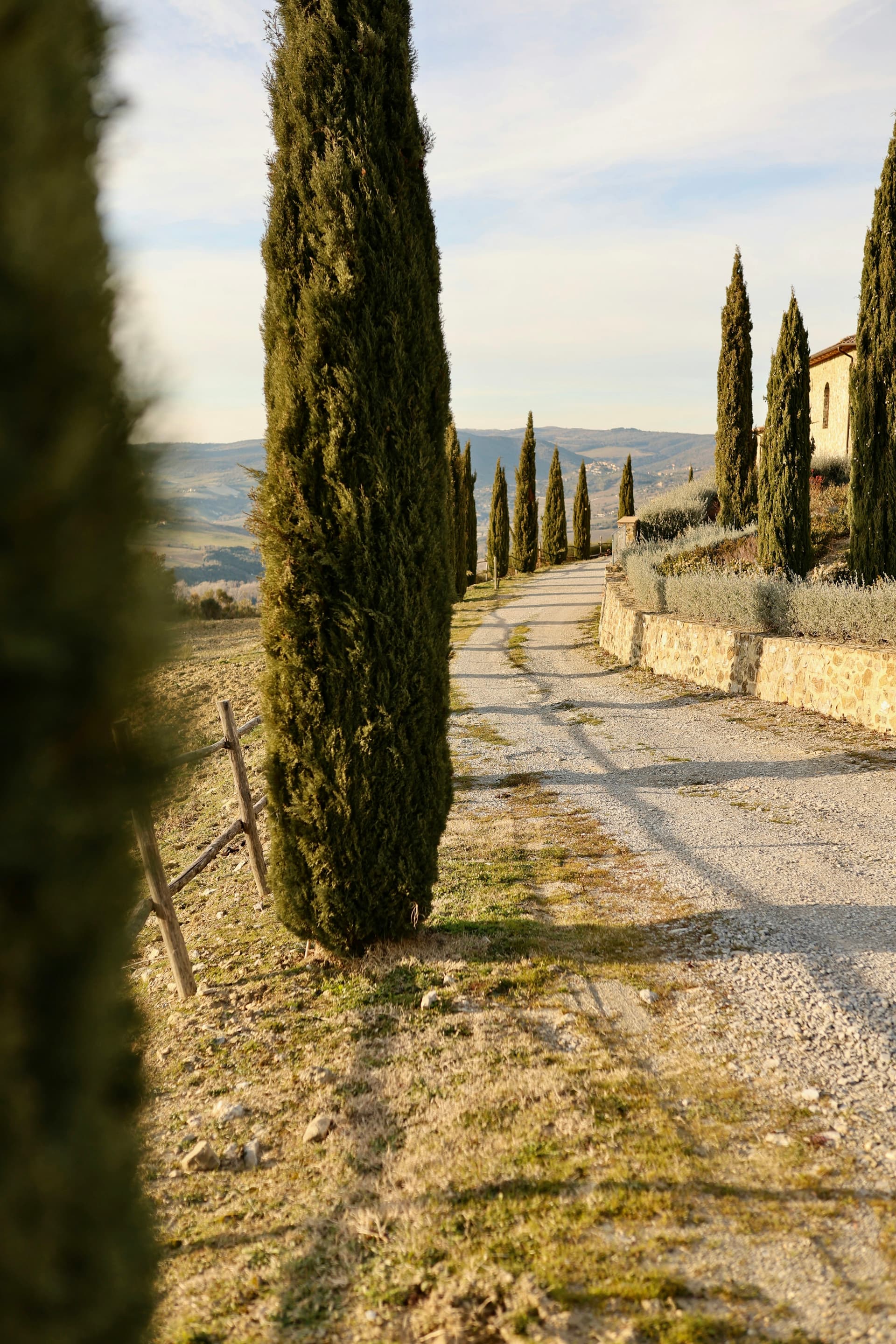
Photo: Unsplash
The cypress hedge is one of the oldest garden inventions in the western world. The Romans planted them as property lines two thousand years ago on the Bay of Naples, along the Appian Way, at the villas of Pompeii. The same dark green wall still runs across Tuscan farms today, along Andalusian courtyard gates, down the drives of Bodrum villas, and behind the new estates rising in the Istanbul hills. It is the single most enduring architectural plant in the Mediterranean vocabulary.
It is also the single most common source of expensive failure we are called to diagnose on villa projects — not because the plant is fragile, but because a cypress hedge is a long conversation between a gardener and time, and almost every owner tries to shortcut that conversation. The hedge bought as an instant screen, planted in a row too tight and fed too generously, is the hedge dying unevenly ten years later while the client is still paying off the original planting.
A cypress hedge that will still be beautiful in twenty years is planted with a different intention. This essay is about what that intention looks like, the nine decisions that determine whether the hedge keeps its form for a generation, and what we know after sixty years of planting and maintaining them across seven countries.
The material — choose the right cypress before you plant anything
Most villa owners say "cypress" and mean a single tree. The atelier plants at least four distinct species of cypress in hedge work, each fitted to a particular job.
Italian cypress (Cupressus sempervirens 'Stricta'). The classic exclamation mark — narrow, upright, reaches 12 m. For a formal row hedge rather than a dense privacy wall. Plant at 70 to 90 cm on centre for a tall, vertical screen that keeps its columnar form, where you want silhouette more than total opacity.
Leyland cypress (× Hesperotropsis leylandii). A hybrid, fast-growing, 1 m a year in the first decade, ideal for quick privacy on new villa plots. It will give you a full screen in five to seven years. The cost: Leyland needs proper annual pruning from the start and becomes unmanageable if neglected for three years. We plant it when the client genuinely needs a wall, not a statement.
Monterey cypress (Cupressus macrocarpa). The most coastal-tolerant cypress, beautifully salt-resistant, with a loose, slightly wild form. Ideal for Aegean and Mediterranean coastal villas where wind and salt shred other species.
Arizona cypress (Cupressus arizonica 'Blue Ice'). Silver-blue foliage, exceptional drought tolerance once established, slower growth than Leyland. The Gulf and Levant-hot-inland choice where summer reaches 45 °C and irrigation may falter.
Matching species to site is the first decision and the one most often skipped. A Leyland planted in Jeddah at 48 °C will fail. A sempervirens 'Stricta' planted for dense screening leaves gaps you cannot fix. Before we place the first tree, we walk the site, measure peak summer heat, soil pH, wind exposure, and proximity to salt — and the species follows.
The spacing — the decision that determines the hedge's second decade
Spacing is where short-term thinking does the most damage. A 2-metre-tall Leyland planted at 1 m on centre gives a full screen in three years and is strangling itself at ten. An Italian cypress planted at 50 cm on centre will fuse at the base and never breathe.
Our rules, refined over three generations:
- Italian cypress 'Stricta' for formal silhouette: 70 to 90 cm on centre
- Italian cypress for dense screening: 60 cm on centre (you will lose some to eventual thinning)
- Leyland cypress for screen: 120 cm on centre
- Monterey cypress: 150 cm on centre — it wants to breathe
- Arizona cypress: 120 cm on centre
The instinct is always to plant closer and get the wall sooner. The consequence is a hedge that peaks at year eight, declines through year twelve, and has to be torn out and replanted by year fifteen. The right spacing looks sparse for two years and is a solid wall by year six — and at year twenty, the gaps the tight planting created have not opened.
The ground — what happens before the tree arrives
A cypress hedge fails from below. The tree may look healthy for three or four years on poor drainage or shallow soil, and then an entire row browns in a single heat spell because the root system was never given room to work.
Before planting we insist on:
- A trench, not individual holes. Dig a continuous trench 60 cm deep by 80 cm wide along the hedge line. Breaks the compaction, gives a continuous root run, and makes irrigation installation cleaner.
- Drainage verification. Fill a test hole with water. If it stands past 8 hours, the site has a drainage problem that will rot cypress roots. Either regrade or install a French drain along the low edge.
- Soil that is free-draining but not starved. We amend the backfill with 30% coarse grit and 10% compost. Nothing richer — rich soil produces soft, fast growth that fails first under stress.
- Stakes only where genuinely needed. Cypress roots strengthen in response to wind movement. Over-staked trees become structurally lazy.
The first three years — water discipline as education
Every cypress hedge we plant is on a dedicated low-volume drip irrigation line, separate from any lawn or bed. The watering schedule for the first three years is not negotiable, and it is the schedule that trains the root system for the rest of the hedge's life.
- Year one: Deep watering twice a week in spring and autumn, three times a week in peak summer. Each emitter delivers 4 litres per hour over a 30-minute run. Skipping a week is fine; over-watering is not.
- Year two: Reduce to once a week except in heat waves. The root system is now finding its own water.
- Year three: Twice a month in summer, nothing otherwise. The hedge is weaning itself off irrigation.
- Year four and beyond: Monthly in true drought, nothing otherwise. A mature cypress hedge on deep soil should survive a Mediterranean summer without supplemental water.
The hedge that fails at year six is almost always the hedge that was watered daily for six years, its roots shallow, its tissues soft, its failure inevitable.
The first cut — restraint, then rhythm
New cypress hedges want to grow vertically fast. If you let them, you will have a thin, leggy screen with bare trunks at the bottom.
The protocol:
- In year one, pinch the growing tip of each tree back by 10 to 15 cm in late spring. The instinct is to leave them alone. Resist.
- In years two and three, trim the top by 30 cm every spring once the hedge is approaching desired height, and lightly clip the sides to an inward-tapered shape — wider at the base than at the top, 10 to 15 degrees.
- From year four onward, twice-yearly light shaping. The tapered profile is what keeps the bottom of the hedge in full sun, which is what keeps it dense to the ground for decades.
Never cut into brown wood in a cypress. Unlike yew or laurel, cypress does not regenerate from old wood. A hard cut into interior brown material leaves a permanent hole.
Feeding — less than you think
A mature cypress hedge on a well-sited villa garden should need almost no supplemental feeding. The most common failure is over-fertilisation, which pushes soft fast growth that the next summer cooks.
When feeding helps:
- The first two years, to establish. A balanced organic feed (something around 5-5-5 NPK with micronutrients) applied lightly in early spring.
- On poor alkaline soils, a chelated iron application every three years to prevent gradual chlorosis on limey coastal soils.
When feeding hurts:
- Any time after year four on good soil
- Any nitrogen-heavy lawn fertiliser that happens to spill into the hedge line
- The autumn, on any cypress at any age — late nitrogen produces soft growth that freezes
The proximity question — how close to buildings, walls, and driveways
A cypress hedge that will last twenty years cannot be planted against hardscape without consequence. Root zones expand; canopies widen; what fits today fails the owner later.
Minimum clearances we insist on:
- 3 m from any built wall or house foundation
- 2 m from a driveway or path that cannot flex
- 1.5 m from a property-line fence (for your neighbour's sake, and to allow clipping access from the far side)
- 4 m from the edge of a swimming pool, because shed needles acidify pool water and blocked drainage lines get messy fast
When these clearances cannot be met, we install an HDPE root barrier at planting time. Preventing a problem costs a tenth of repairing it.
The first sign of trouble — what to look for and when
A mature cypress hedge is not immortal but it is unusually communicative. Problems show up for months before they become fatal.
- Individual branch browning with a dark sunken spot on the bark: Seiridium canker. Prune the affected branch 20 cm below the lesion, sterilise tools between cuts, burn the prunings.
- Uniform base-up browning on an entire tree, soil is wet: Phytophthora. Cut irrigation, investigate drainage, install gravel drainage trench if needed.
- Grey desaturation in the interior of the hedge, spreading out: Cypress aphid. Apply two rounds of horticultural oil ten days apart. Call an arborist for a systemic treatment if the infestation is heavy.
- One-sided browning after a winter storm: Winter burn. Do not prune until May; apply anti-desiccant in autumn.
Our monthly villa maintenance contracts specifically include cypress inspection — every tree looked at by a trained eye quarterly — because the cost of a missed canker in year six is replanting ten trees in year seven.
The twentieth year — what a well-planted hedge looks like
A cypress hedge planted with restraint at the right spacing, in the right soil, watered correctly for three years and then largely left alone, at twenty years old is a single architectural element. The base is dense to the ground. The top is tapered. The sides have been shaped by two light clips a year for two decades and look intentional, not forced. The root zone is deep and extensive. The hedge has survived three drought summers, two hard winters, and a decade of use without thinking about it.
This is the hedge of the old Roman villas. It is the hedge of the Tuscan farms. It is the hedge our grandfather Faisal established in the nurseries of Daraya in 1965, stabilised through the decades in Damascus, and that we continue to specify today on villa projects from Çekmeköy to Marrakech. It is not a commodity. It is a craft decision.
Where the atelier fits
NAS Landscape has specified, sourced, and planted cypress hedges across seven countries and three generations. Our Istanbul practice delivers hedges across Çekmeköy, Zekeriyaköy, Beykoz, and the Bosphorus coastline. Our Gulf and Levant projects have lined driveways and boundaries for royal estates, resort developments, and private villas. Every hedge we put in the ground is planned for its second decade, not its second year.
If you are specifying a cypress hedge on a new site, renovating an old row, or diagnosing a hedge that has started to fail, send a photo and a few details on site exposure to WhatsApp +90 535 422 5227. A real landscape architect will respond the same working day, and the first read is free.
NAS Landscape · Damascus 1965 · Istanbul today. Written by MHD ZUHIR MADAMANI.
◆ A real diagnosis, not a guess
Send a photo. Get a plan.
Our specialists handle cases like yours across Istanbul and the wider region. Share a photo on WhatsApp or book a free site visit — whichever is faster for you.
60+ years · 7 countries · 500+ projects · third-generation atelier
◆ More field notes
 Hardscape
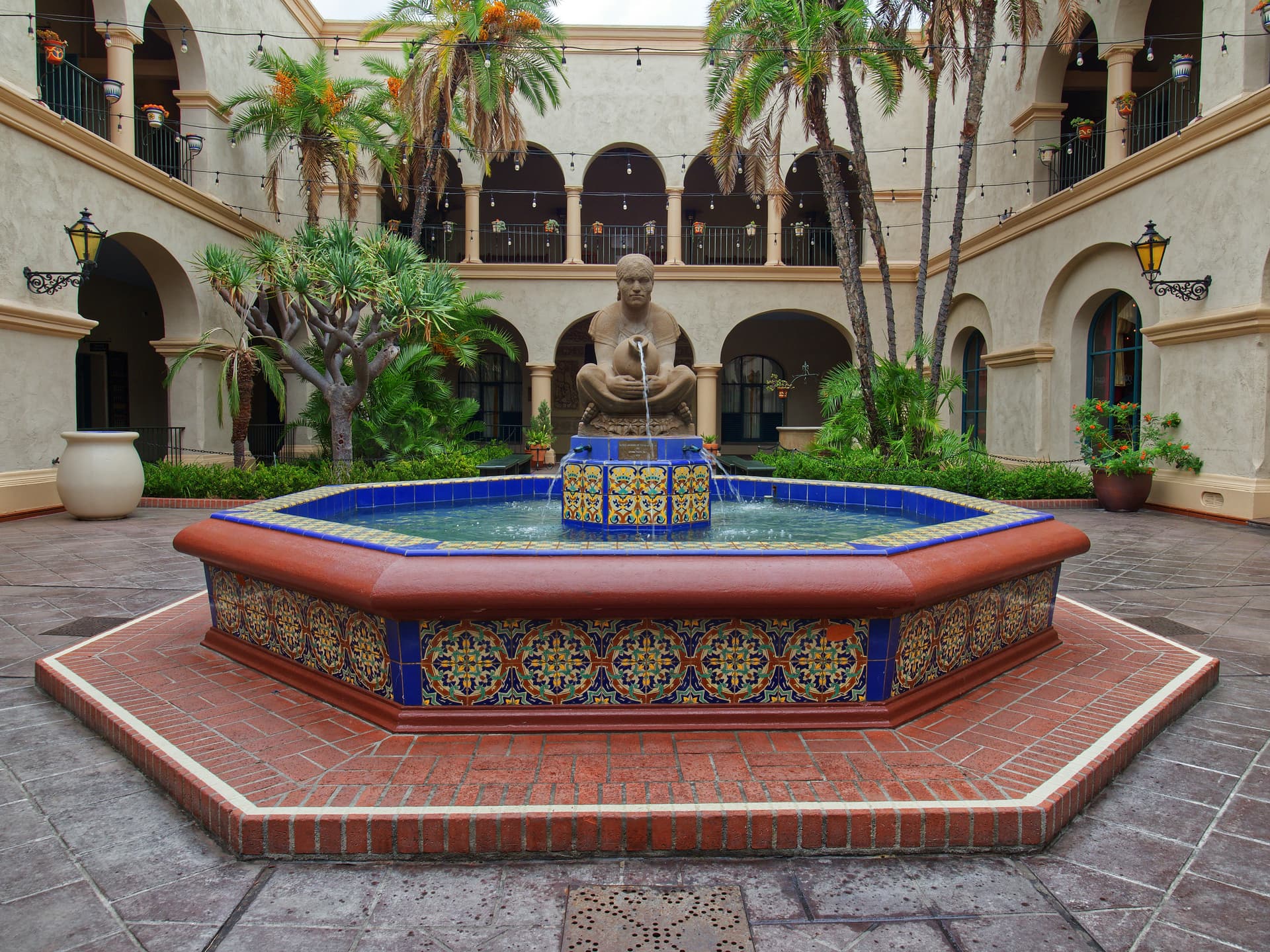
Water Features in the Mediterranean Garden: Fountains, Reflecting Pools, and What Actually Works
The sound of water is the first thing a Damascene, Andalusian, or Moorish garden gives you. Three thousand years of engineering distilled into four classical forms — and why every estate we touch ends up with one.
 Hardscape
Choosing Stone for a Mediterranean Garden: Travertine, Limestone, or Slate?
The stone you choose defines the garden for forty years. Here is how the atelier picks — by climate, use, and how the stone ages.
 Hardscape
Garden Lighting That Does Not Scream 'Hotel Lobby': A Villa Design Guide
A villa garden is used at night more than during the day, for six months of the year. Bad lighting turns it into a forecourt. Good lighting makes it a theatre. Here is how the atelier handles it.
Editorial & digital direction
Written, designed, and built by MHD ZUHIR MADAMANI · Istanbul