Water Features in the Mediterranean Garden: Fountains, Reflecting Pools, and What Actually Works
The sound of water is the first thing a Damascene, Andalusian, or Moorish garden gives you. Three thousand years of engineering distilled into four classical forms — and why every estate we touch ends up with one.
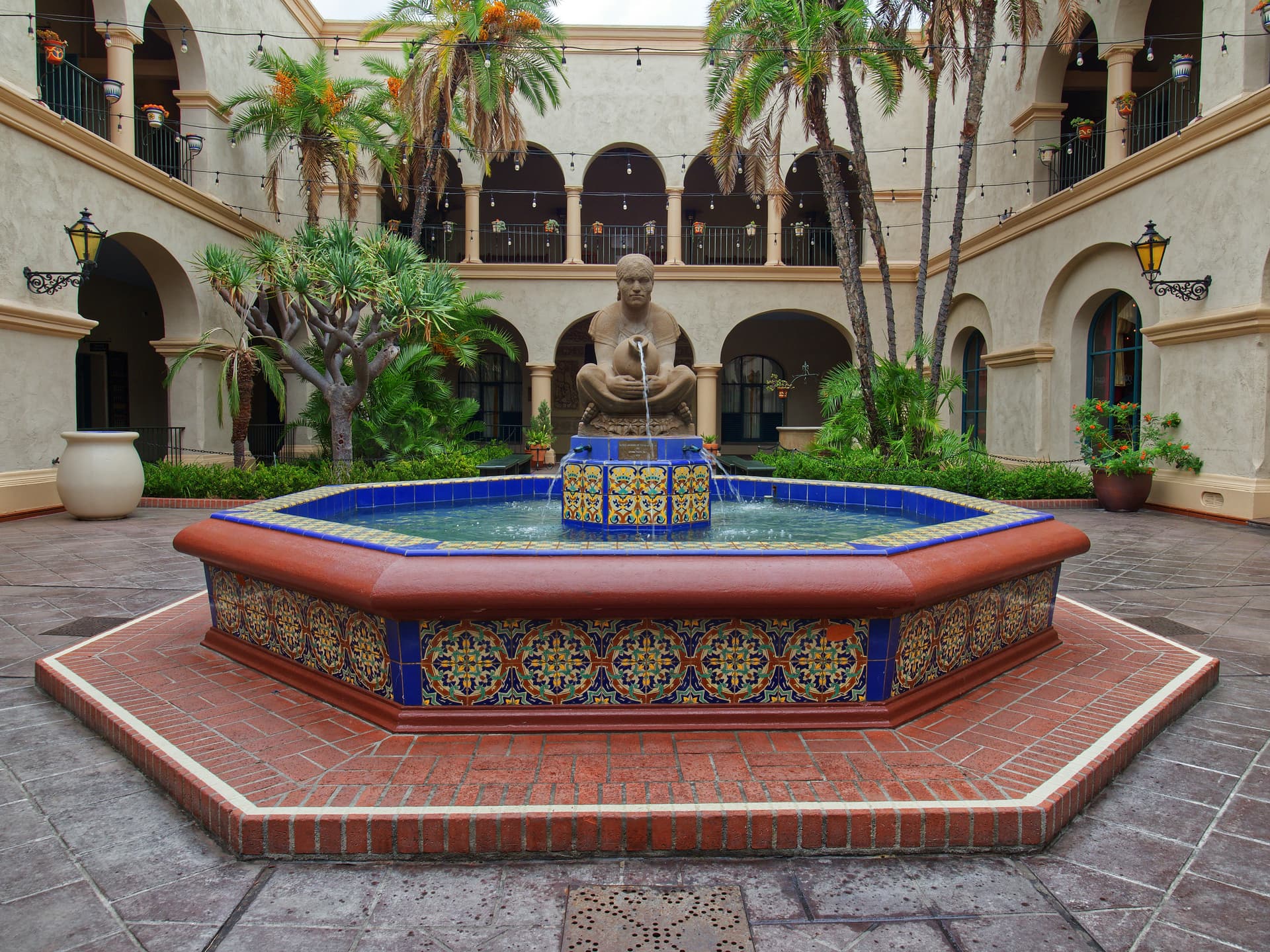
Photo: Unsplash
The sound of water is the first thing a Damascene, Andalusian, or Moorish garden gives you. Before you see the plants, before you see the paving, before you see the shade of the myrtle — you hear a single clear note, water falling on stone, and you understand instantly what kind of garden you are in. A Mediterranean garden without water is a Mediterranean room with one essential object missing.
The engineering of garden water has been refined across the region for three thousand years. The Persians brought the shallow rill. The Moors brought the bisected courtyard with a fountain at each quadrant. The Andalusians perfected the low basin. The Ottomans simplified everything and sank the water into recessed marble platforms on terraces. The Damascene riads took the Moorish court and softened it with jasmine. None of this is decoration — all of it is climate design. Water in a hot-summer garden cools the air, masks the sound of the street, draws birds, humidifies the courtyard, and for the family, marks time.
This essay is about what a working water feature in a contemporary Mediterranean or Levantine villa garden actually looks like, how it is engineered, how it is maintained, and why — despite the cost and the complexity — every estate we touch ends up with one.
The four classical water features
Centuries of Mediterranean, Arab, and Persian garden practice have distilled water features into four families, each suited to a different role in the garden.
1. The fountain (sabil, fuente)
A single vertical element, usually stone, with water rising from a central jet or falling from a tier of bowls. The fountain is the focal point of the courtyard or the formal terrace — it is where the garden pauses, and where the eye rests.
The engineering is deceptively simple: a submersible pump in a hidden reservoir, pressurised water rising through a pipe concealed in the central element, and overflow recycling back to the reservoir. The craft is in everything else — the height of the jet (too high throws water onto paving), the sound of the fall (different basin geometries give different notes), the proportions relative to the space (oversized fountains dominate, undersized ones disappear).
Our default specification on villa courtyards is a stone basin 1.2 to 1.8 metres in diameter, carved from local stone to match the hardscape, with a central jet rising 40 to 60 centimetres. The reservoir is sized for 48 hours of running time without refill, so that the family can go away for a weekend without returning to a dry pump.
2. The reflecting pool (alberca, shatah)
A horizontal sheet of still water. In the Andalusian garden tradition — the Alhambra's Court of the Myrtles, the palace pool at the Alcázar of Seville, the Moroccan riads — the reflecting pool is the primary architectural element, and the planting is arranged around it. The pool reflects the sky, the clouds, the cypresses, the house; it doubles everything above and gives the garden depth and stillness.
Engineering a reflecting pool correctly is harder than a fountain. The water must be kept clean (requires filtration, occasional chemical balance), the coping must be perfectly level, the lining must not leak, and the pool must be shallow enough to stay clear — typically 30 to 45 cm deep, no more. Too deep and the pool reads as a swimming pool, defeating the aesthetic point.
We specify reflecting pools on estate projects in Amman, Marrakech, and on some Istanbul villa courtyards. The surface area must be large enough to register as a mirror — minimum around 3 m × 3 m for the reflection to work visually.
3. The rill and channel (acequia, nahr)
A narrow linear channel of moving water, often cut into stone paving at a terrace or running alongside a path. The rill is the Andalusian and Persian answer to bringing water into the working garden without dominating the composition. It also reads beautifully — linear, directional, dynamic without being loud.
A rill requires careful level engineering and usually a pump at the downstream end that returns water to a reservoir to feed the upstream start. The width is typically 15 to 25 cm, the depth similar, the water depth 10 cm. The sound is subtle — a soft gurgle — and works particularly well on long formal terraces where a fountain would feel placed rather than integrated.
4. The low basin (maqam, mangal)
The smallest and most underused water feature: a single stone or ceramic bowl, 60 to 100 cm in diameter, filled with water and often holding a water lily or scattered rose petals. No pump. No movement. Just water as a mirror in a single pooled disc, on a table, a plinth, or set into a courtyard floor.
The low basin is a traditional Moroccan and Andalusian element, and we specify them liberally — in small courtyards, on terraces where a fountain is too much, beside entrance doors, on kitchen garden tables. They are the easiest water feature to maintain (top up weekly, scrub monthly) and the most flexible architecturally.
The engineering — what the finished thing hides
A good water feature looks inevitable. The engineering that makes it so is invisible.
The reservoir. Every recirculating water feature needs a reservoir — the tank that holds the working water. On estate projects we specify 500 to 2000 litres depending on the feature size. The reservoir sits below ground or behind a service wall, accessible for cleaning but not visible from the garden. Undersize the reservoir and you are constantly refilling; oversize and you waste space and installation cost.
The pump. A submersible pump sized for the specific flow rate needed — a 40 cm fountain jet requires about 2000 litres per hour; a 5 m rill requires 3500 litres per hour. Undersized pumps starve the feature; oversized pumps waste energy and create noise. The pump is the single piece of equipment most often specified incorrectly by non-specialist contractors.
Water treatment. Standing water breeds algae and bacteria in Mediterranean summers. Our protocol: a small in-line UV sterilizer (20 W for a fountain, 55 W for a reflecting pool), plus a scheduled automatic dosing of hydrogen peroxide (the most benign sanitiser that works) at weekly intervals. No chlorine — it makes the water feature smell like a pool, defeating the purpose.
The fill line. A hidden automatic fill valve maintains the water level against evaporation. In a Gulf summer, a 10 m² reflecting pool evaporates 80 litres a day. Without auto-fill, the feature empties in a fortnight.
Drain and overflow. Every reservoir needs an overflow drain at the level the pool or fountain should sit at. Heavy rain will overflow an un-drained feature within a single storm.
Lighting. Submersible low-voltage LEDs at the base of the fountain or at the bottom corners of a reflecting pool transform the feature at night. Warm white at 2700K, not cool white. Uplighting makes the water read as illuminated rather than lit from above.
Where a water feature goes — the placement questions
Position matters more than form. A fountain in the wrong place is loud; a reflecting pool in the wrong place collects leaves. The questions we ask on site:
Where does the family actually sit? The water feature should be audible — not dominant — from the primary seating area. "Audible" means the sound registers softly in background; "dominant" means you cannot have a conversation over it. The height of the jet controls this.
Where does the wind cross? A fountain positioned in a wind corridor throws water onto paving, into planting, and eventually off the feature entirely in even a moderate breeze. Wind matters more than most specifiers credit.
Is there shelter from afternoon sun? A shallow reflecting pool in full afternoon sun heats to 30 °C and grows algae within a week regardless of filtration. Partial shade at 2-4 pm is essential.
Can services get to it? Water, electricity, overflow drain, maintenance access. We have seen features built into the centre of a paved courtyard with no service access — the pump fails and the entire courtyard has to be lifted to reach it. Plan the access first.
What does it sound like at night? A courtyard fountain that sounds beautiful at midday can sound industrial at 2 a.m., when the rest of the world is quiet. We adjust jet height and basin geometry based on a night-sound test during commissioning.
Maintenance — the real cost of a water feature
A badly-maintained water feature is worse than no water feature. Green algae, a stuck pump, sludge in the basin — these turn an elegant element into a problem the owner resents. Our maintenance contracts for estate water features include:
Weekly (automated or gardener):
- Top up the reservoir if auto-fill is not installed
- Skim any leaves or debris
- Check the pump is running (surprisingly common failure mode: a small leaf blocks the intake)
Monthly:
- Inspect and clean the pump intake filter
- Check water clarity and colour; dose sanitiser if needed
- Verify the automatic fill valve is functioning
- Check lighting fixtures for algal growth on the lens
Quarterly:
- Full reservoir drain and scrub
- Inspect all plumbing connections for leaks
- Service the pump (replace impeller if worn)
- Inspect and re-seal any stone joints that show weeping
Annually:
- Full commissioning check: flow rates, pressure, overflow performance
- Replace UV sterilizer lamp (annual bulb change — critical, an expired UV lamp is useless)
- Re-level coping if any settling has occurred
- Winter protocol in cold climates: drain the feature fully before first frost
The cost — realistic numbers
A small courtyard fountain properly engineered (stone basin, pump, reservoir, lighting, water treatment): €8,000 to €18,000 installed, depending on stone selection and scale.
A formal reflecting pool (3 × 4 m, including proper filtration and fill system): €20,000 to €45,000.
A linear rill along a 10 m terrace with pump and reservoir: €15,000 to €30,000.
A low basin (single stone bowl, no pump): €800 to €3,000 depending on stone.
These are real numbers for estate-quality installations. The cheap alternatives — plastic basins, garden-centre pumps, fibreglass liners — look cheap, fail within three years, and are rarely worth the initial saving. A properly engineered water feature lasts thirty to fifty years with the maintenance outlined above.
The tradition we work from
NAS has designed and engineered water features across three generations of courtyard restoration, villa design, and estate work. Our Damascene projects have restored fountains in courtyards that originally held them, sometimes using the original stonework and rebuilding only the working mechanism underneath. Our Moroccan commissions in Marrakech and Tangier have built classical Moorish alberca. Our Gulf estates have incorporated water features as climate devices — the water lowers the perceived temperature of an adjacent terrace by 3-4 °C, entirely justifying the installation cost.
Where the atelier fits
If you are building a new courtyard, renovating an old one, or planning a reflecting pool or fountain as part of a new villa garden, the engineering matters as much as the aesthetic. We design and deliver the whole piece — from stone selection through hydraulic engineering through lighting through maintenance contract.
When to call us
Call the atelier when:
- You are restoring a courtyard with an existing fountain that no longer works and want it rebuilt properly
- You are designing a new villa and want a water feature specified correctly from day one, not retrofitted
- Your existing water feature has chronic algae, leaks, or pump failures and you want an engineering audit
- You are planning an estate garden and want classical water features (Moorish alberca, Ottoman basin, Persian rill) researched and built authentically
A garden with working water is a garden that sounds alive. Send a site photo and a note about what you imagine, to WhatsApp +90 535 422 5227. A real landscape architect will respond the same working day, and the first read is free.
NAS Landscape · Damascus 1965 · Istanbul today. Written by MHD ZUHIR MADAMANI.
◆ A real diagnosis, not a guess
Send a photo. Get a plan.
Our specialists handle cases like yours across Istanbul and the wider region. Share a photo on WhatsApp or book a free site visit — whichever is faster for you.
60+ years · 7 countries · 500+ projects · third-generation atelier
◆ More field notes
 Hardscape
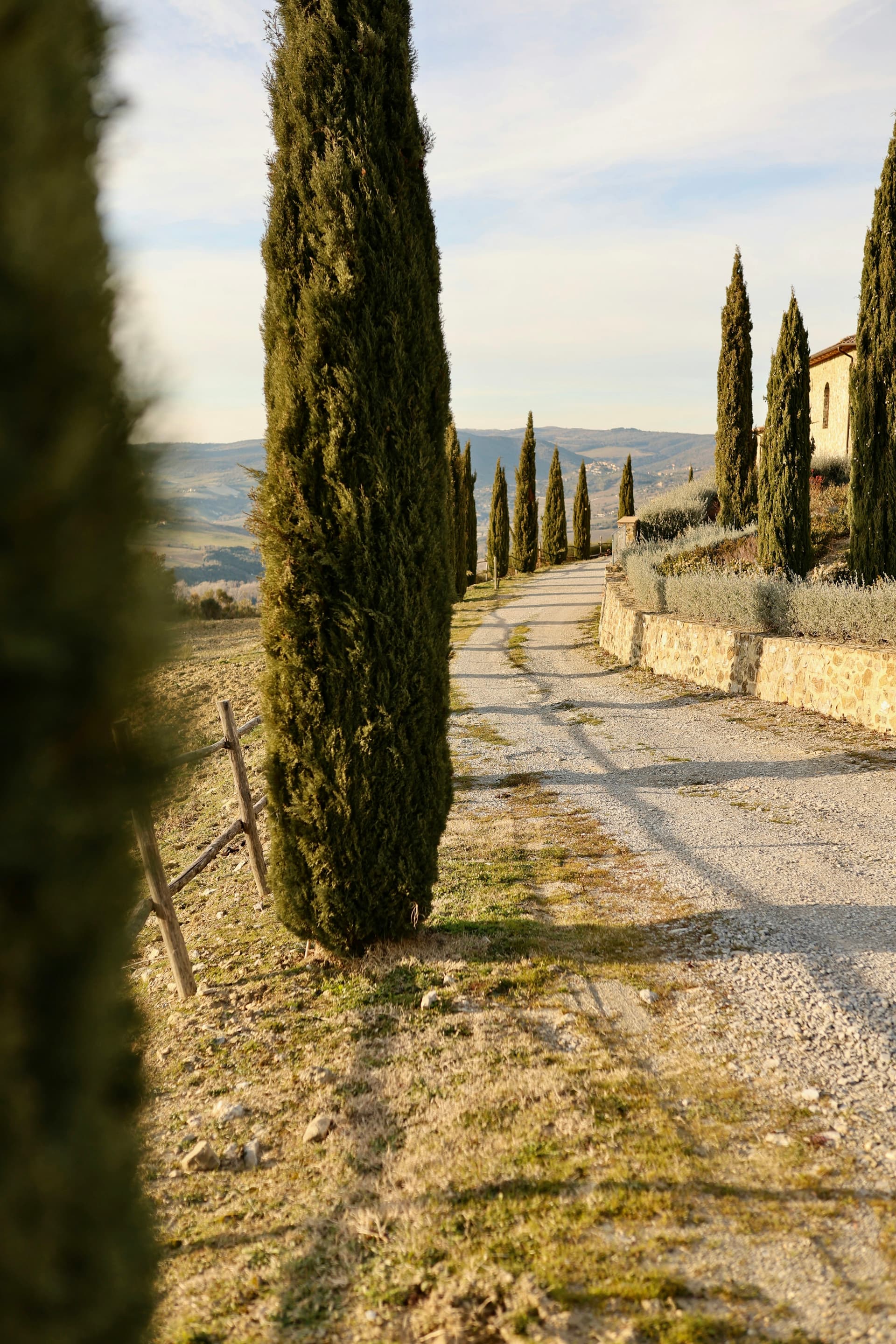
How to Plant a Cypress Hedge That Will Still Be Perfect in Twenty Years
A cypress hedge is a long conversation between a gardener and time. Almost every owner tries to shortcut it — and the hedge dies unevenly ten years later. Nine decisions that determine whether it stands for a generation.
 Hardscape
Choosing Stone for a Mediterranean Garden: Travertine, Limestone, or Slate?
The stone you choose defines the garden for forty years. Here is how the atelier picks — by climate, use, and how the stone ages.
 Hardscape
Garden Lighting That Does Not Scream 'Hotel Lobby': A Villa Design Guide
A villa garden is used at night more than during the day, for six months of the year. Bad lighting turns it into a forecourt. Good lighting makes it a theatre. Here is how the atelier handles it.
Editorial & digital direction
Written, designed, and built by MHD ZUHIR MADAMANI · Istanbul