Can You Move a Mature Olive Tree? Yes — and Here Is the Atelier's Protocol
You inherited a villa with a 60-year-old olive in the wrong place. The contractor says it cannot be moved. He is wrong. Here is how the atelier actually moves century-old trees — and what it really costs.
Photo: Unsplash
Having this problem in your own garden?
Get a free site visitYou bought the house because of the olive tree. The seller said it had been there since his grandfather's time. Then the architect drew the extension and it turns out the pool terrace lands exactly where the tree stands. The contractor shrugs and says, "it's too old to move — easier to cut it."
This is a conversation we have almost weekly. The short answer is: the contractor is wrong. The longer answer is that moving a mature olive is expensive, requires a year of preparation, and is only worth doing if it is done right. This is the atelier's protocol — the same one we use for heritage trees destined for royal estates, for trees we rescue from development sites, and for villa clients who refuse to lose a tree that lived through four generations.
First: yes, it really can be moved
Olive trees are among the most resilient transplant candidates on earth. The species has been moved by humans since before written history — every ancient olive grove in the Mediterranean exists because someone carried a tree to it. A 60-year-old olive, prepared correctly, will survive the move. A 400-year-old specimen will too.
What kills moved olives is not the move itself. It is one of three mistakes, all preventable: no root preparation, summer timing, or inadequate aftercare. Get those right and the tree survives.
The preparation year
A mature olive cannot be moved on short notice. It needs roughly twelve months to prepare its root system for the transplant shock. This is the step that separates successful moves from dead trees.
Month 0 — root pruning (autumn, a year before the move):
In the autumn before the intended move, dig a trench around the tree at roughly one metre from the trunk for every 10 cm of trunk diameter. A tree with a 50 cm trunk gets a trench at 5 metres from the trunk, 60 cm deep. Inside this trench, cleanly cut every root encountered with a sharp saw or loppers.
The tree does not like this. It responds by pushing new fibrous roots into the volume inside the trench. By the time you move it next autumn, this fibrous ball is what keeps the tree alive after transplant. Without this step, you are moving a tree whose entire feeding root system has been severed — and it will die.
Months 1 to 10 — maintenance during the preparation year:
Water the tree consistently through summer but not excessively — you want it mildly stressed so the new roots develop vigorously. Light pruning in February, no heavy cuts, no fertiliser beyond a single spring feeding.
Month 11 — pre-move preparation:
A month before the move, lightly water the root ball area to soften the soil. Tie up the canopy with padded ratchet straps — a mature olive with 3-metre spread becomes 1.5-metre spread when bound. Mark the north-facing side of the trunk with paint or a plastic tag.
◆ NAS Landscape
Not sure if this applies to your garden?
The four causes above look alike from a distance but need different treatments. A 30-minute site visit from our specialist gives you the right answer — no guessing.
Request a free diagnosisThe moving week
Actual transplant happens in October or November — after the summer stress but before winter cold slows root healing.
Day 1 — excavation:
A skilled excavator operator (not any crane operator — someone who has moved trees before) digs the root ball along the line of the original trench. The ball is typically 1 to 1.5 times the canopy radius in diameter, 80 cm to 1.2 metres deep, weighing 3 to 8 tonnes depending on tree size.
As the ball is lifted, a webbing sling goes under it and the entire ball is wrapped in hessian and chicken wire — not to constrain it, but to prevent the ball cracking in transport.
Day 2 — transport:
The wrapped tree is loaded onto a lorry or trailer with the canopy facing the direction of travel (not backwards — branches snap). The root ball stays wrapped and damp throughout transport. Maximum 48 hours from lift to replanting.
Day 3 — replanting:
The new pit must be ready before the tree arrives. It is 1.5 times the width of the root ball and 10 cm shallower than the ball depth — a mature olive should sit slightly above grade, not sunk in.
The pit base is filled with 10 cm of coarse gravel for drainage. The tree is lowered into the pit, the hessian removed from the top half of the ball (leaving it around the base for stability), and the pit is backfilled with a mix of 60 percent site soil and 40 percent imported loam.
The tree is oriented so the painted north marker faces north — this matters. Olives have bark that developed tolerances for specific sun exposures over decades. Rotating a tree stresses the bark.
Deep initial watering (200 to 400 litres), then staking for stability against wind. The stakes stay for 12 to 18 months.
Aftercare — the two-year watch
The first year after transplant is the make-or-break period.
Year 1:
Water deeply every 10 days from April to October — 100 to 200 litres per watering for a medium tree. No fertiliser for the first 6 months. Expect dramatic leaf drop in months 2 to 4 — the tree is shedding old foliage because its remaining roots cannot support it. This looks alarming. It is normal.
Around month 5 to 6 you will see new shoots emerging from the branch tips. This is the tree recovering. When that happens, you can exhale.
Year 2:
Reduce watering to every 14 days. Light feeding in spring (balanced fertiliser at half rate). Light pruning only — remove any branches that are clearly dead, nothing more.
By the end of year 2 the tree should look indistinguishable from its pre-move state. By year 5 you would not know it had been moved.
Real cost expectations
A lot of the articles you will find online on this topic are vague about money. The numbers, from NAS's actual invoices on recent villa commissions in Türkiye and the Gulf:
- Preparation year (root pruning, monitoring): €500 to €1,200 depending on site access
- Transport and crane (a 5-tonne root ball, short distance): €2,500 to €5,000
- Replanting and first-year aftercare: €1,500 to €3,500
- Total for a typical 60-year-old tree on-site or short-distance move: €4,500 to €9,500
Heritage trees over 200 years old, or moves over long distances with specialist transport, can reach €20,000 to €40,000. A tree genuinely worth that kind of investment is worth that kind of care.
When not to try
Do not attempt the move if:
- The tree shows existing disease (Verticillium wilt, olive knot, or advanced trunk rot). Moving it will kill it and potentially infect the new site.
- There is no preparation year available. An unprepared move of a mature olive has roughly 30 percent survival.
- The new site has waterlogged or poorly drained soil. Fix the drainage first.
- The root ball cannot be accessed (tree between buildings, in a paved courtyard with no machinery access). Some trees cannot be saved despite everyone's best efforts.
The atelier's specialty
Mature olive transplants are one of the three pillars of NAS's practice, alongside landscape design and maintenance. We have moved trees of 40 to 400 years old across seven countries for three generations. Our success rate on properly prepared moves is above 95 percent.
If you are considering moving an olive — whether to save it from construction, relocate from one property to another, or acquire a heritage specimen for a new villa — send us the tree's photos and the site context on WhatsApp +90 535 422 5227. A real landscape architect will review it the same working day and tell you honestly whether the move is advisable, what it will cost, and what we can guarantee.
NAS Landscape preserves, transplants, and installs mature and heritage olive trees across Türkiye, Syria, the Gulf, Jordan, Morocco, and Bahrain. Established 1965, Damascus. Written by MHD ZUHIR MADAMANI, Istanbul.
◆ A real diagnosis, not a guess
Send a photo. Get a plan.
Our specialists handle cases like yours across Istanbul and the wider region. Share a photo on WhatsApp or book a free site visit — whichever is faster for you.
60+ years · 7 countries · 500+ projects · third-generation atelier
◆ More field notes
 Craft & Heritage
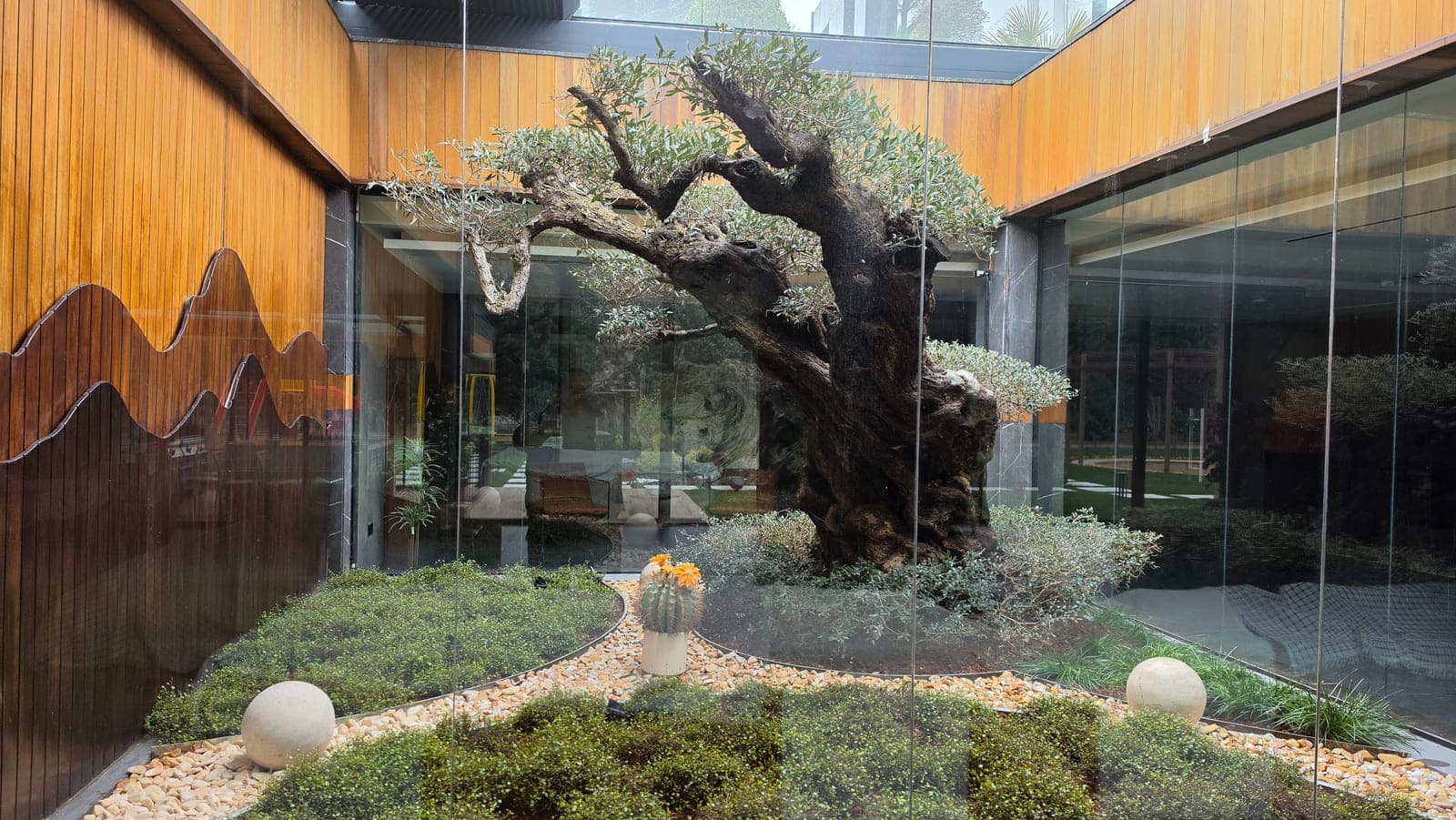
How to Choose the Best Landscape Atelier in Istanbul: A Decision Framework
A villa garden is a fifty-year promise. The wrong atelier costs you twice — once in the planting, again in the replanting. Here is the framework we wish every villa owner used before signing the contract — five markers of a real atelier, four questions to ask, and the red flags that should send you walking.
 Craft & Heritage
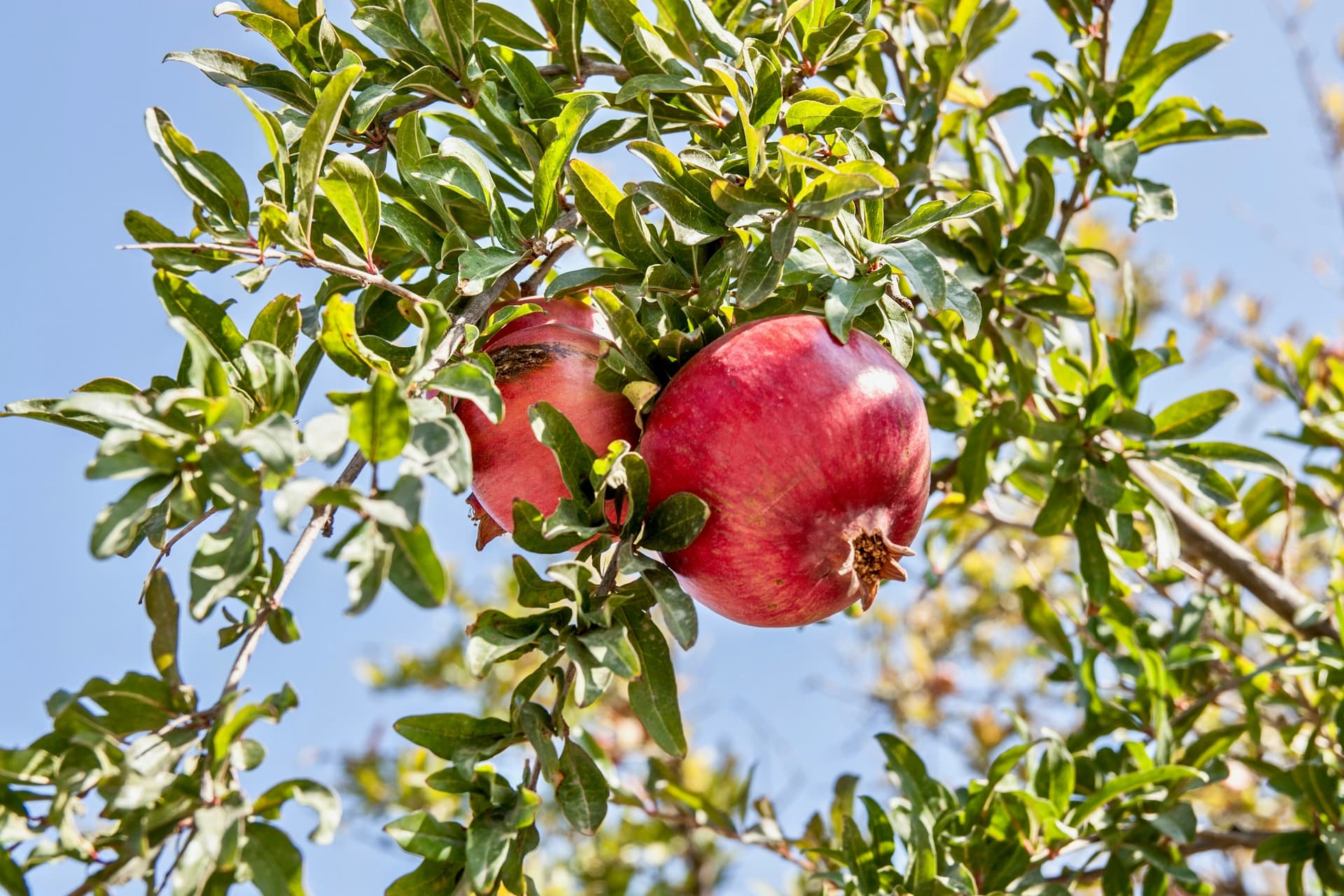
The Pomegranate Tree: Heritage, Symbol, and the Fruit on Your Table
The pomegranate is not a tree for landscaping. It is a decision about where a family sits in relation to its memory. Seven thousand years of domestication, twelve centuries of Andalusian selection, and why we still plant it on every villa commission.
 Craft & Heritage
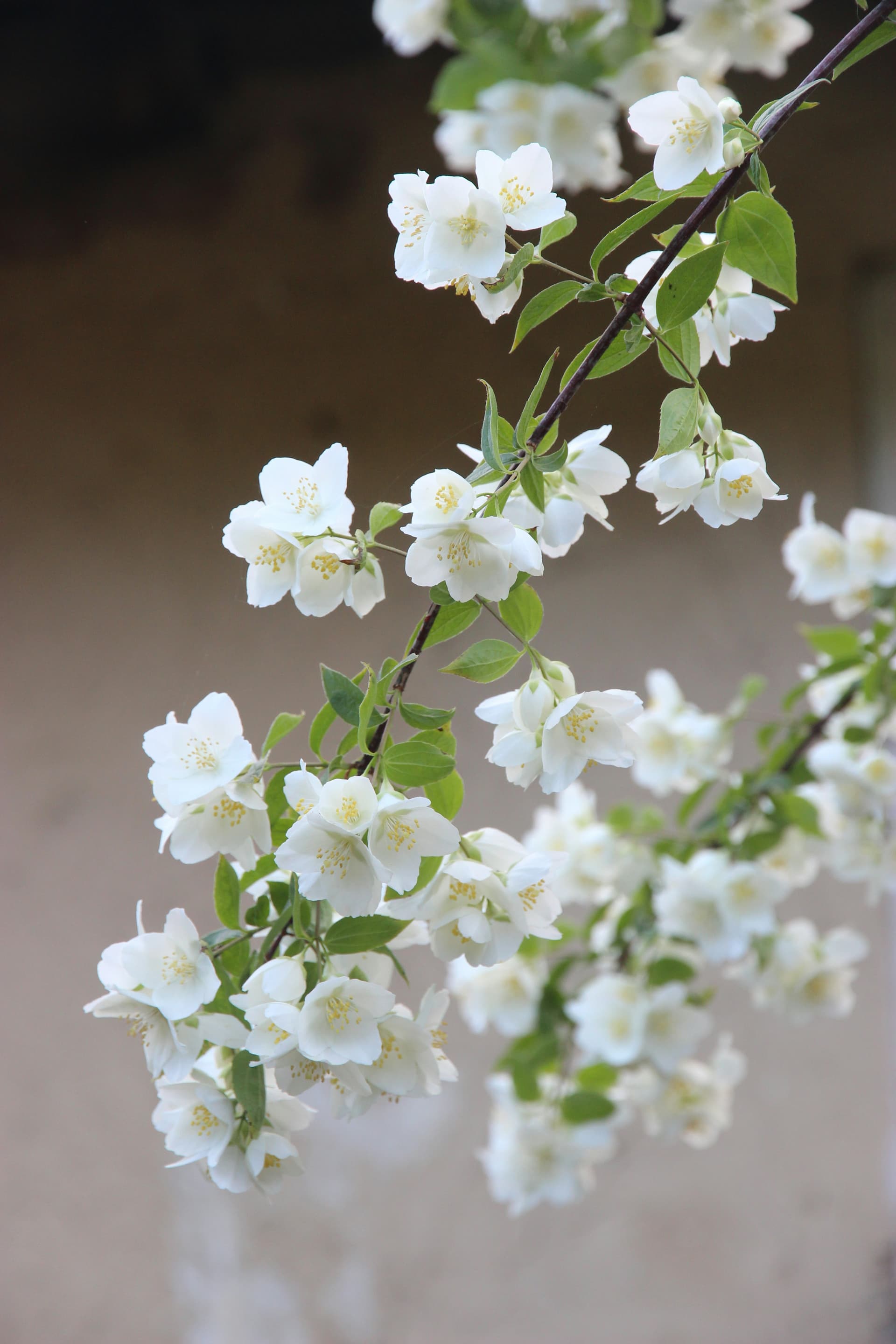
Jasmine: The Fragrance That Built NAS
In 1965 the first nursery in Syria was named Mishtal Al-Ful Wal Yasmin — the Nursery of Jasmine — after a tree the founder's wife loved. Sixty years on, jasmine is still at the centre of what we do and why.
Editorial & digital direction
Written, designed, and built by MHD ZUHIR MADAMANI · Istanbul